
Employee Handbook Template UK: Essential Guide for 2026
An employee handbook template for UK businesses is often seen as a simple starting point for ticking an HR box. But it's so much more than that. It’s the very foundation of your employment relationships, designed to bring clarity, provide legal protection, and set the tone for your company culture.
Using a well-structured template allows you to create a comprehensive guide that protects your business and supports your team right from the start.
Why Your Handbook Is More Than Just a Document
Let's be honest. For many business owners, creating an employee handbook feels like a chore—just another piece of paperwork to get done. But what if it was actually one of the most powerful tools you have for building a successful, stable business? The most forward-thinking UK companies know that a handbook is far more than a rulebook; it's a genuine strategic asset.
A properly crafted handbook, built from a solid template, is your first line of defence against misunderstandings and costly legal disputes. It moves your business beyond vague verbal chats and into a world of professional clarity and consistency, setting the standard for your entire employment relationship.
Establish Operational Clarity from Day One
Without a formal handbook, you’re leaving crucial details wide open to interpretation. New hires are left guessing about how to book holidays, what the procedure is for calling in sick, or your policy on flexible working. This quickly leads to confusion and inconsistent practices, where different managers apply different rules, breeding a sense of unfairness across the team.
An effective employee handbook cuts right through that chaos. It gives everyone a single, reliable source of truth for all those everyday questions. This empowers them to get on with their work confidently and frees up your managers from answering the same questions over and over.
This clarity directly benefits your business by:
- Defining Key Procedures: It clearly explains everything from requesting annual leave to the proper use of company equipment.
- Setting Performance Standards: It communicates exactly what you expect when it comes to professional conduct, communication, and job performance.
- Onboarding New Hires Effectively: It gives new starters a complete guide to how things work from their very first day.
Mitigate Risk and Ensure Compliance
The legal landscape for UK employers is notoriously complex and always changing. A staff handbook is one of your most critical tools for managing legal risks and proving you've met your compliance duties. It provides documented evidence that you have clearly communicated all legally required policies to your staff.
A documented policy, acknowledged by an employee, is far more defensible in an employment tribunal than a casual verbal agreement. It demonstrates that the business has acted fairly and transparently, which is essential for defending against claims of unfair dismissal or discrimination.
Taking this proactive approach is vital. It’s why modern tools like the Robot Lawyer platform are so valuable—they let you generate a custom, legally sound handbook without the hefty price tag and time drain. It’s not just about listing rules; it’s about building a robust foundation for your business to grow on.
What Policies Must Go in Your UK Handbook for 2026?
Keeping up with UK employment law can feel like a full-time job in itself. To keep your business safe, there are certain policies your employee handbook absolutely must include. These aren't just 'nice-to-haves'; they're legal requirements that form the bedrock of a fair and compliant workplace.
Getting these policies wrong—or worse, not having them at all—is a surefire way to invite misunderstandings that can easily escalate into costly tribunal claims. An ambiguous grievance process can spiral, and a missing health and safety policy is a serious risk to both your team and your business.
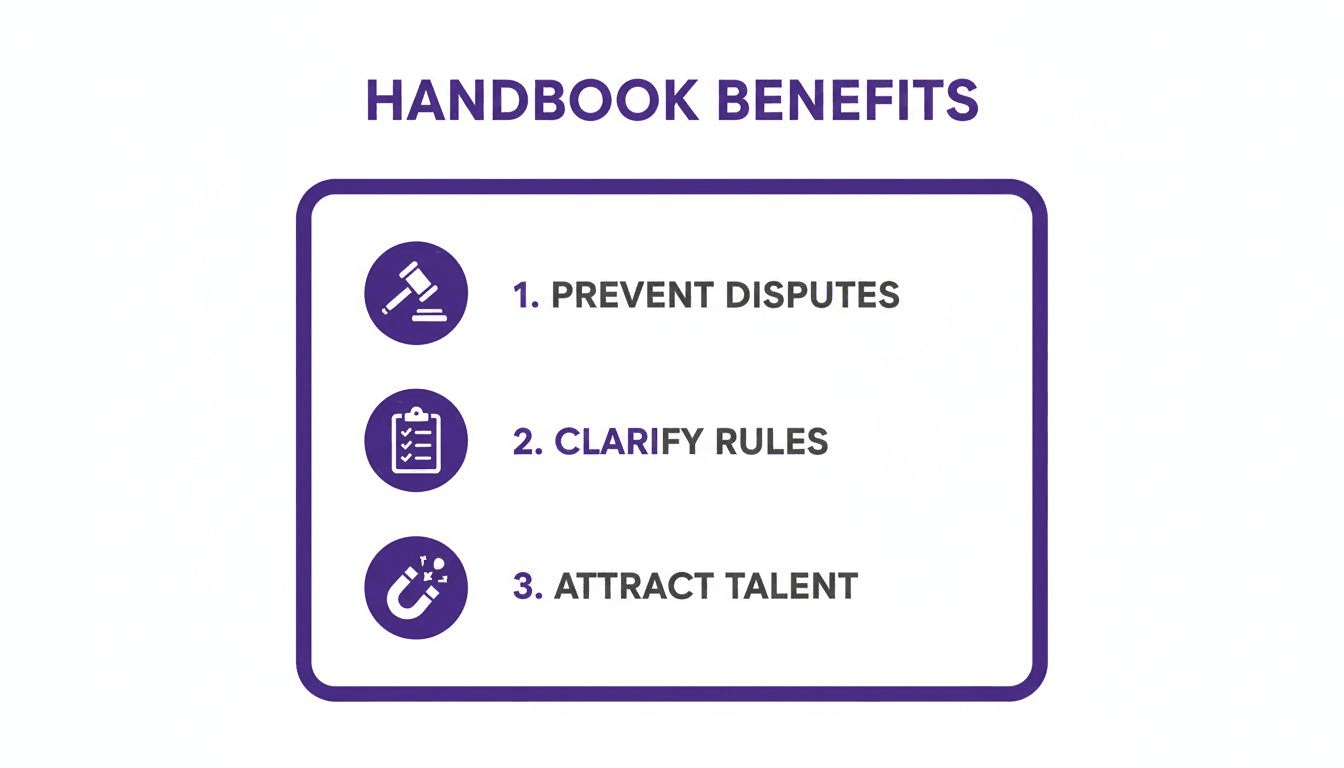
A solid handbook does more than just tick compliance boxes. It's a tool for preventing disputes, clarifying expectations, and even attracting the best people.
Create Company Policies Here!
Think of these policies as the non-negotiable foundations.
Disciplinary and Grievance Procedures
This is perhaps the most critical part of your handbook from a legal standpoint. You are legally required to tell your employees what steps you'll take if there's a disciplinary issue and how they can formally raise a problem. There’s no room for grey areas here.
Your policy must clearly explain:
- The exact steps an employee needs to follow to lodge a formal grievance.
- The process you will use if an employee’s performance or conduct becomes an issue.
- How your procedures align with the ACAS Code of Practice, which tribunals use as a benchmark.
Failing to have a clear, written process is one of the quickest ways to face an unfair dismissal claim. A good template will give you a solid starting point for this crucial section.
Health and Safety Policy
If you have five or more employees, the law says you must have a written health and safety policy. This document isn't just paperwork; it outlines your commitment to keeping your team safe.
It needs to cover three main things:
- A general statement of intent for health and safety.
- The names and specific roles of the people responsible for safety.
- The practical steps you take to manage risks, from fire drills to first aid kits.
This policy has to be tailored to your specific workplace, whether that’s an office, a construction site, or a remote setup.
Sickness Absence and Pay
What should an employee do if they're too ill to work? Who should they call, and by what time? Your handbook needs to lay out a clear, consistent procedure for reporting sickness. This stops confusion and ensures everyone is treated fairly.
The policy also needs to explain how you handle statutory pay, including:
- Statutory Sick Pay (SSP): Who qualifies for it and how it’s paid out.
- Family-Related Leave: Your procedures for maternity, paternity, adoption, and shared parental leave and pay.
While the basic entitlements are set by law, your policy provides the practical details your employees need.
Data Protection and GDPR
How you manage employee data is under more scrutiny than ever. A data protection policy is a legal must-have to show you're complying with GDPR. It also gives your staff peace of mind that you're handling their personal information responsibly and securely.
If you need a more detailed look at what this involves, our comprehensive data protection policy guide breaks it all down.
Your handbook is a vital shield against legal pitfalls. Tribunal claims have surged due to outdated policies, and for 2026, employers must scrutinise anti-harassment protocols, parental leave expansions, and hybrid work rules. This is especially true as employee engagement in the UK remains low, with only 10% of staff feeling engaged, costing businesses dearly.
Getting these mandatory policies right is the most important first step. They form the legal backbone of your handbook, protecting your business and building a foundation of trust with your team.
Crafting Policies That Build a Great Workplace

Create Company Policies Here!
A compliant handbook keeps your business safe, but a truly great one helps it grow. Once you've got the legal must-haves sorted, it’s time to think about the policies that turn your handbook from a simple rulebook into a tool for building a fantastic workplace culture. These are the policies that show your team you care about more than just the bottom line.
This is your chance to define what it really feels like to work at your company. Thoughtful policies on flexible working, mental health, and diversity aren't just about ticking a box; they actively create a culture that attracts and keeps the best people. By addressing the real-world needs of your staff, you become an employer people want to work for.
Going Beyond the Basics with Flexible Working
In today's job market, a clear and supportive flexible working policy isn't a perk anymore—it's a core expectation. For small and medium-sized businesses, this has a massive impact; 63% saw a drop in staff turnover after bringing in a well-defined hybrid or remote work policy. Not having one is a major own-goal.
Your policy must provide absolute clarity to prevent confusion or feelings of unfairness. Think about outlining:
- Eligibility: Who can request flexible arrangements and what the process looks like.
- Expectations: Be specific about core hours, how you expect teams to communicate, and any days people need to be in the office.
- Support: Detail what equipment the company provides and any stipends available for home office setups.
A vague approach just creates chaos. A clear, well-communicated policy, on the other hand, shows you trust your team and gives them the autonomy they value, which almost always boosts morale and productivity.
Championing Wellbeing and Mental Health
Being proactive about employee wellbeing is one of the smartest investments you can make. Poor mental health is a huge driver of long-term sickness absence, with stress and anxiety at the top of the list. Your employee handbook can make a genuine difference here, helping you shift from a reactive stance to a supportive one.
Amid the ongoing wellbeing revolution, UK employee handbooks must evolve. With 40% of workers feeling stressed daily, costing businesses £15 billion in misaligned rewards, taking action is critical. Progressive employers are now embedding access to virtual GPs and other support systems directly into their policies, a trend that forward-thinking handbooks should reflect. Discover more about these crucial labour market trends from the Office for National Statistics.
Even small businesses can have a big impact. While only 49% of SMEs currently offer dedicated mental health support, there are accessible ways to fill this gap. Your policy should not just state your commitment but also signpost people to available resources, whether that's an Employee Assistance Programme (EAP), trained mental health first aiders, or just links to reputable charities.
Simple, low-cost initiatives can also be formalised in your handbook:
- Promoting regular breaks and discouraging a culture of working through lunch.
- Encouraging open conversations about mental health to reduce stigma.
- Providing clear guidance on things like menopause and fertility support.
Platforms like Robot Lawyer can help you generate expertly verified policies that address these modern needs, with plans starting from just £13.99. This ensures your employee handbook template for UK businesses is both compassionate and compliant.
Building a Truly Inclusive Culture
An Equal Opportunities and Diversity policy is a legal non-negotiable, but its real power goes far beyond compliance. It’s a public statement about your company's character and your commitment to fairness. A great policy does more than just list the protected characteristics under the Equality Act 2010.
It should actively explain how you are committed to creating an inclusive environment where everyone feels valued and respected. It’s not just a nice-to-have; over 80% of employees say they feel more valued when their company has strong recognition and inclusion initiatives.
Your policy should also detail a clear, confidential process for employees to raise concerns without any fear of comeback. This is crucial for building psychological safety, where issues can be dealt with before they grow into bigger problems.
Staying Current with Modern Workplace Policies
Finally, your handbook needs to reflect the world we live and work in right now. Two policies that are becoming essential are those covering social media and the use of Artificial Intelligence (AI).
- Social Media Policy: This guides employees on how to represent the company online, which protects your brand reputation while still respecting their personal freedom.
- AI Usage Policy: This sets clear boundaries for using AI tools at work, covering important areas like data privacy, confidentiality, and the responsible use of the technology.
By including these forward-thinking policies, you show that your business is ready for the future of work, not stuck in the past. This strategic approach turns your handbook into a cornerstone of a thriving, modern workplace.
From Template to Tailor-Made Handbook
Create Company Policies Here!
Starting with an employee handbook template for UK businesses is a great first step, but the real work—and where you get the most value—is in the customisation. This is your chance to turn a generic document into something that genuinely reflects your company's vision and how you actually operate day-to-day. A solid template gives you the legal bones; it's up to you to add the personality.
These days, you don't have to stare at a blank page wondering where to begin. Modern platforms can guide you through a series of straightforward questions about your business. Based on your answers, they generate legally sound clauses, saving you a massive amount of time on writing and research.
This approach is a lifesaver. It makes sure you don't overlook any crucial legal bits while freeing you up to focus on what really matters: tailoring the handbook to your specific business needs.
Involve Your Team in the Process
One of the most common pitfalls I see is a business owner writing the handbook completely on their own. A policy that seems perfectly logical in an office might fall apart on the factory floor or for a team working from home. To sidestep this, get your team leads and managers involved in the review.
These are the people who have to apply and manage the policies every single day. Their real-world perspective is gold. Ask them direct questions:
- "Does this sickness reporting procedure actually work with your team's shift patterns?"
- "Is this policy on using company equipment clear enough for a brand-new starter to understand?"
- "How could we make our flexible working request process a bit fairer and more efficient for everyone?"
Getting their feedback is invaluable. It grounds your handbook in the reality of your workplace, which makes it far more likely that people will actually follow the rules. It also gives your managers a sense of ownership, which is a huge plus.
Write for Humans, Not Just Lawyers
Yes, your handbook has to be legally compliant, but remember who it's actually for: your employees. If it’s stuffed with dense legal jargon and formal corporate speak, you can bet nobody will bother reading it. The best handbooks are written in simple, clear, and human language.
Key Takeaway: Ditch the formal tone. Instead of something like, "All employees are required to adhere to the aforementioned communication protocols," just say, "Please communicate respectfully with colleagues and clients." It’s direct, simple, and much more effective.
Think of it as having a conversation. Use a friendly, approachable tone that matches your company culture. A readable handbook is a useful handbook, and that’s the ultimate goal. A good template provides the legal framework, giving you the freedom to tweak the tone without risking compliance.
For instance, when you're laying out your remote work rules, clarity is everything. Our guide on creating a work from home policy has some great, practical examples you can adapt.
Fine-Tune for Your Company Values
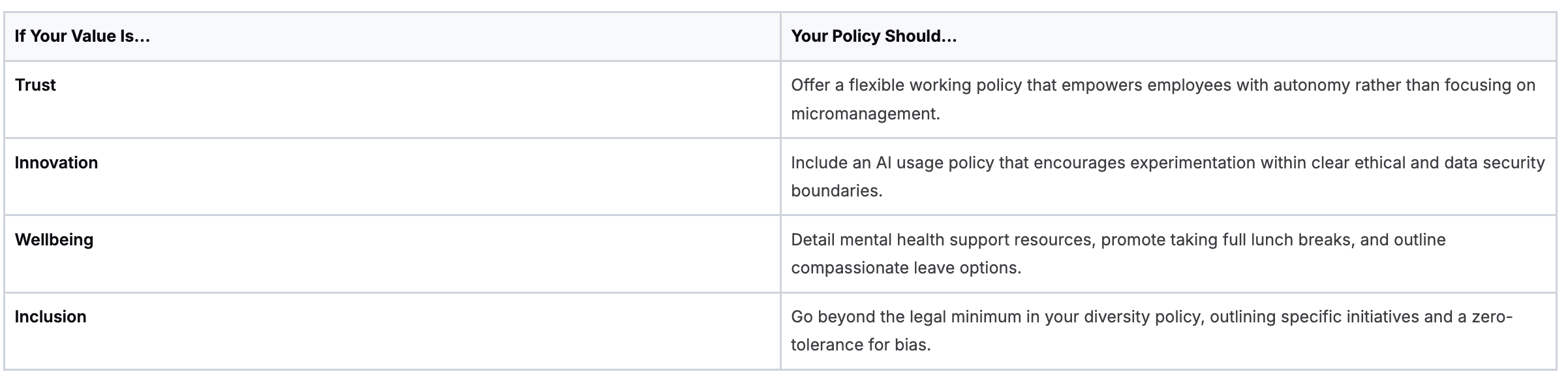
Your handbook is more than just a rulebook; it's a powerful statement about your company's values. It’s where you show your team what you stand for, beyond just turning a profit. As you work through your template, keep asking yourself: does this policy align with our core principles?
Create Company Policies Here!
Every single clause, from your code of conduct to your holiday policy, is a chance to strengthen the culture you're trying to build. When your handbook truly reflects your company's identity, it becomes much more than a set of rules.
When to Seek a Final Professional Review
Even if you’ve used a top-notch template and customised it carefully, getting a final pair of expert eyes on it can give you that extra layer of confidence. This is especially important if you’re in a heavily regulated sector or have complex employment structures.
A legal professional can:
- Spot Nuances: They can check that your custom clauses don't accidentally create contractual obligations you didn't intend.
- Verify Compliance: They’ll give it a final once-over to ensure everything is up to date with the latest UK employment law.
- Offer Peace of Mind: Knowing your core document has been professionally vetted lets you roll it out without any lingering doubts.
Using a platform like Robot Lawyer gives you a huge head start by blending automated efficiency with expert-verified content. It turns a daunting task into a manageable project, leaving you with a handbook that's truly fit for your business.
Launching and Maintaining Your Handbook Effectively
You’ve put in the hard work, refining an employee handbook template for UK businesses into something you’re proud of. So, what’s next? Don't let your efforts go to waste with a clumsy rollout.
How you introduce the handbook is just as important as what's inside it. If you simply email it out, it can feel like a new set of rules designed to catch people out. That breeds suspicion, not trust. The goal is to present it as a tool for clarity and fairness, something that makes work better for everyone.
Getting the Launch Right
Just attaching the handbook to a company-wide email is the quickest way to ensure it’s never read. A more thoughtful approach is needed to show your team you’re serious about it.
- Gather the team: The best way to start is with a dedicated meeting. This is your chance to explain why you’ve created the handbook. Frame it as a positive step towards transparency and consistency.
- Walk through the highlights: You don’t need to read it cover-to-cover. Instead, touch on the policies that answer the most common questions – think holiday requests, sickness reporting, or your flexible working arrangements. Show them how it makes their lives easier.
- Open the floor for questions: A Q&A session is non-negotiable. It shows you're open to feedback and helps clear up any confusion from the get-go. This is how you build trust.
- Get it in writing: After the meeting, send out the digital copy. Critically, you need a simple way for each employee to formally acknowledge they've received and understood it. This is a vital step for your own legal protection.
Getting this right from day one turns the handbook from a dusty document into a genuinely useful resource. For particularly sensitive areas like employee conduct, you can find more detailed guidance in our disciplinary action policy templates.
Your Handbook Is a Living Document
Think of your handbook as a garden, not a statue. It needs regular attention to stay relevant and compliant. A handbook that was perfectly fine last year could easily become a liability if left untouched.
As a rule of thumb, schedule a full review of your handbook at least once a year. You should also be ready to update it immediately in response to major changes in UK employment law or big shifts in your own business, like introducing a permanent hybrid working model.
This proactive mindset is crucial for staying on the right side of the law.
With 84% of UK business leaders feeling optimistic about growth for 2026, having solid foundations is more important than ever. Handbooks are one of those foundational tools, especially for small businesses and startups trying to scale up without falling into compliance traps. And as government incentives allow companies to grow to 500 full-time equivalents, using precise templates from platforms like Robot Lawyer Limited helps prevent costly mistakes. You can read more about the positive UK employment outlook on BambooHR.com.
Whenever you make changes, communicate them clearly. Let your team know what’s been updated and why. And always, always get a fresh acknowledgement that they’ve received the new version. This simple habit keeps your handbook valuable, compliant, and a true asset to your business.
Common Employee Handbook Questions Answered
When creating or updating your employee handbook, certain questions come up time and again. Here are clear, straightforward answers to the most common queries from UK business owners and HR managers.
These insights will help you finalise your employee handbook template UK with confidence, knowing you’re on the right track.
Is an Employee Handbook a Legal Requirement?
This is a common point of confusion. While no single UK law states, "You must have a complete employee handbook," you are legally required to provide certain pieces of information to staff in writing. A handbook is simply the most efficient and professional way to meet these obligations.
The Employment Rights Act 1996, for instance, requires you to give employees a "written statement of employment particulars." You must also provide written details of your company's disciplinary and grievance procedures.
So, while the entire book isn't compulsory, key sections within it are. Using a handbook bundles these legal necessities into one organised document, protecting your business and ensuring every employee gets the same, correct information.
How Often Do I Really Need to Update My Handbook?
Think of your handbook as a living document, not something you write once and file away. To keep it useful and compliant, you need a regular review schedule.
As a rule of thumb, you should plan for a full, comprehensive review of your entire employee handbook at least once a year. This cadence ensures your policies stay aligned with your company’s culture and the law.
Some events, however, will require immediate updates outside of your annual review. You must update your handbook whenever:
- UK employment law changes: New legislation on topics like flexible working, parental leave, or statutory pay rates requires prompt policy changes to remain compliant.
- Your company policies shift: If you introduce a new hybrid working model, change your performance review process, or update company benefits, the handbook has to reflect these new realities.
- You've managed a significant HR incident: After handling a serious grievance or disciplinary case, it's wise to review the relevant policy. You'll often find gaps or areas that need clarification to prevent similar issues in the future.
Can I Just Copy Another Company's Handbook?
It might seem like a fast and easy solution, but copying another company's handbook is a very risky shortcut. A borrowed, generic document can create significant legal risks and will almost certainly fail to reflect your company's reality.
Here’s why it's a bad idea:
- It won’t reflect your culture: Your handbook is an opportunity to define your company's unique values and ways of working. A copied document will feel impersonal and disconnected.
- It could be outdated: The handbook you copy might contain policies that are no longer compliant with current UK employment law, putting your business at risk without you even realising it.
- Policies might be irrelevant: Another company's procedures for things like expenses, shift patterns, or equipment use are unlikely to match your own, which only leads to confusion.
A much safer and more effective method is to start with a customisable employee handbook template for UK businesses. A quality template gives you a legally sound foundation that you can then tailor to fit your specific company culture, operational needs, and values.
Creating precise, legally sound documents doesn't have to be a struggle. Robot Lawyer Limited offers an extensive library of templates, from employment contracts to company policies, designed to be customised in minutes. Generate your first document for free and see how simple compliance can be.