
The Ultimate Assured Shorthold Tenancy Template Guide
An Assured Shorthold Tenancy (AST) agreement is the single most important document you'll handle as a private landlord in England. Think of it as the legal backbone of your tenancy, clearly laying out the rules, rights, and responsibilities for both you and your tenant.
What Is an Assured Shorthold Tenancy Agreement
So, what exactly is an Assured Shorthold Tenancy agreement? In simple terms, it's the standard legal contract used for most residential lettings. It's the rulebook that governs everything from how much rent is paid and when, to who is responsible for repairs and under what conditions the tenancy can be brought to an end.
Getting this document right isn't just a box-ticking exercise. A clear, professionally drafted AST is like building a house on a solid foundation; it ensures the entire landlord-tenant relationship stands strong. A vague or poorly constructed agreement, on the other hand, is like building on sand. Sooner or later, you're going to run into problems.
Before we dive deeper, it's useful to have a quick overview of what makes a tenancy an AST.
Here’s a quick summary table that breaks down the essential criteria.
Create an AST here for FREE!
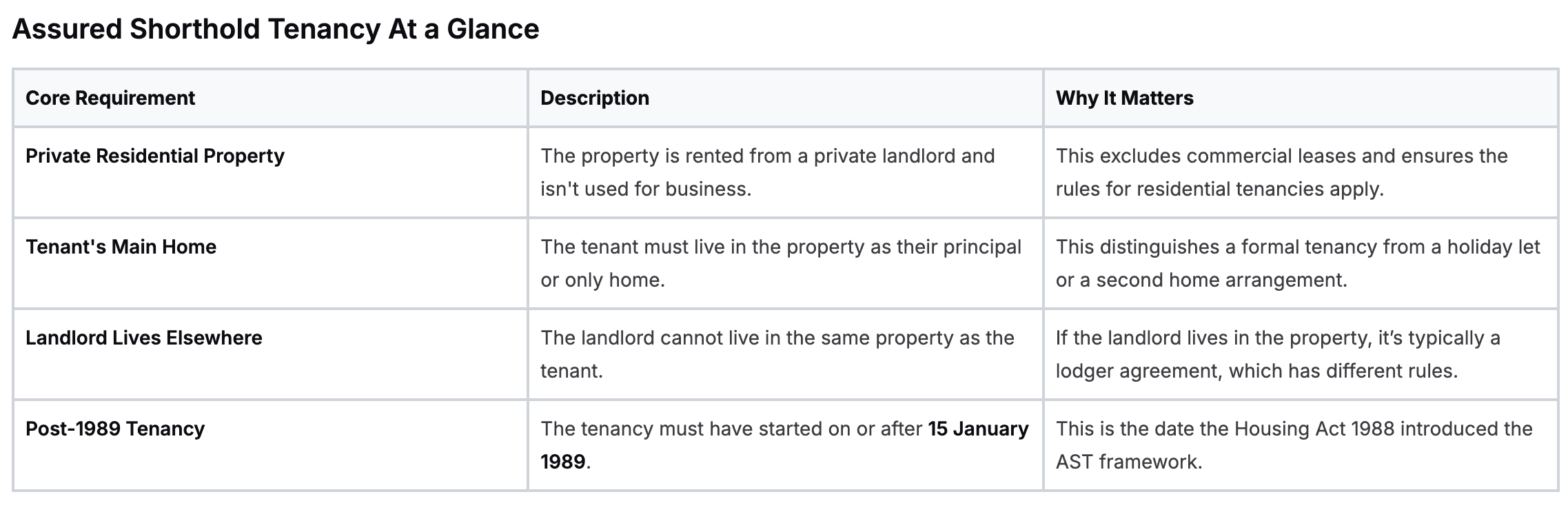
As long as these key conditions are met, the law automatically classifies the agreement as an AST, even if you don't have a formal written contract. However, relying on a verbal agreement is a risky game you don't want to play.
Why a Watertight Template Is a Must-Have
With major legal reforms on the way, starting with a solid assured shorthold tenancy template is no longer just good practice—it's essential.
Important Note: Big changes are coming. The new Renters (Reform) Bill is expected to abolish the creation of new ASTs, likely transitioning all tenancies to a system of rolling periodic agreements. The terms you set in your AST now will almost certainly form the basis of this new arrangement.
This makes using a generic, downloaded-from-anywhere template a real gamble. If your current agreement has gaps or legally questionable clauses, those problems won't just disappear. They'll be baked into the new tenancy structure, making them far more difficult and costly to fix down the line.
A professionally verified template ensures every mandatory clause is present and correct from day one. It's built to protect your investment while being fair to your tenant, paving the way for a smooth transition into the new legal framework. The days of casual, handshake deals are well and truly behind us; getting the legal paperwork right is now the most important step you can take.
The End of an Era Shifting to Periodic Tenancies
Big changes are coming for landlords in England, and it’s a shift you absolutely need to be ready for. The familiar Assured Shorthold Tenancy (AST), which has been the standard agreement for more than thirty years, is on its way out. Understanding what’s replacing it is crucial for protecting your property investment.
The upcoming Renters’ Rights Act 2026 is set to completely reshape the rental landscape. This new law will get rid of new ASTs altogether, moving every private tenancy onto a single, more straightforward system of rolling periodic agreements. For landlords, this signals the end of fixed-term contracts as we’ve always known them.
The Big Bang Implementation
This isn't a slow, phased rollout. The change is happening all at once in a "Big Bang" event scheduled for 1 May 2026. On that day, every single existing AST will automatically become an Assured Periodic Tenancy (APT). This is a compulsory legal switch that will affect all private landlords and tenants across England.
Here’s why that matters right now: the terms you put in your assured shorthold tenancy template today will form the legal bedrock of your new APT. Every clause you set—from rent payments to tenant obligations—will carry straight over. A hastily prepared agreement now could leave you tied to difficult terms long after the 2026 changeover.
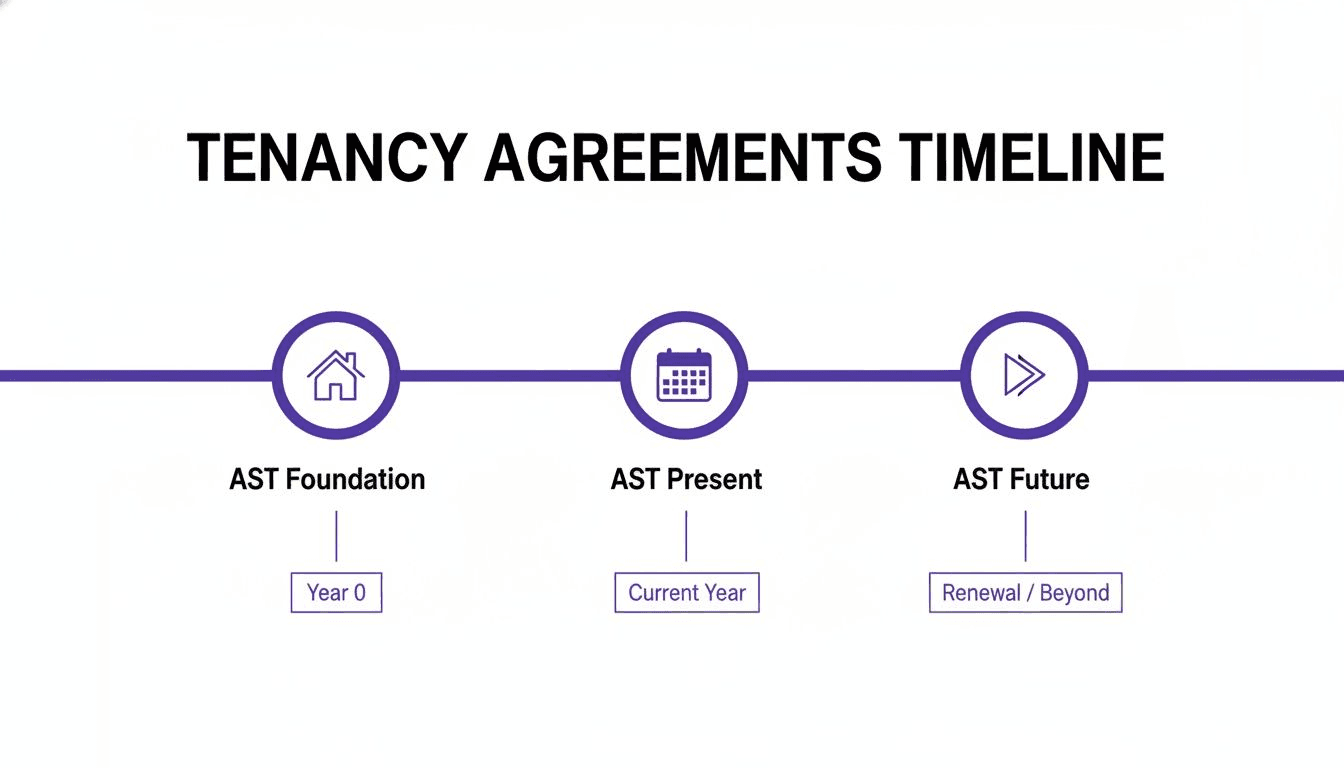
This timeline helps visualise how the groundwork you lay today with an AST directly impacts the future.
Create an AST here for FREE!
As the graphic shows, what you establish in your current AST creates the foundation for the APTs of tomorrow. It’s a clear signal that getting your agreement right from the start is non-negotiable.
The End of Section 21 Evictions
Probably the most significant change for landlords is the end of Section 21 "no-fault" evictions. From 1 May 2026, you'll no longer be able to regain possession of your property just because a fixed term has ended. For years, this has been a fundamental part of the AST system.
Instead, you’ll have to use an updated set of grounds for possession under Section 8 of the Housing Act 1988. This means you will always need a specific, legally valid reason to end a tenancy. Some of these grounds include:
- Significant rent arrears: If the tenant is substantially behind on rent.
- Breach of tenancy agreement: When the tenant has broken a key rule in the contract.
- Landlord wishes to sell: A new ground that allows you to regain possession if you intend to sell the property.
- Landlord or family moving in: If you or a close family member needs to occupy the property.
With Section 21 becoming a thing of the past, a well-drafted tenancy agreement is your most important tool for managing your property and protecting your rights. You can get a better sense of the current rules by reading our guide on the Section 21 notice.
Why Your Current AST Template Matters More Than Ever
These changes are massive, and the market is already adapting. While the AST was once the default, its use is already dropping as landlords prepare for what’s next. In fact, as of 2025, reports indicate only 1% of UK tenants are on an AST as the sector braces for the mandatory switch to Assured Periodic Tenancies (APTs) on 1 May 2026.
This makes your choice of an assured shorthold tenancy template a critical strategic decision. Using a professionally drafted, current template from a trusted source like Robot Lawyer ensures your agreement isn’t just compliant today—it’s built to transition seamlessly into the new periodic tenancy system.
By setting down clear, fair, and legally solid terms right now, you are future-proofing your investment. It’s a proactive step that gives you security and clarity, ensuring a smooth journey into the new era of renting.
Anatomy of a Bulletproof Tenancy Agreement
Create an AST here for FREE!
When you're letting a property, your tenancy agreement is the single most important document you'll sign. A solid assured shorthold tenancy template is the foundation of a successful tenancy, but grabbing a free, generic one online can be a false economy. They often miss the crucial, legally sound clauses you need to actually protect yourself.
Let's break down what separates a flimsy piece of paper from a genuinely bulletproof contract. Think of it as the rulebook for your property. A good one is crystal clear, covers all the bases, and doesn't leave any grey areas for disputes to fester in. It sets out everyone's expectations from day one.
The Non-Negotiable Core Clauses
Every single tenancy agreement has to include a few fundamental details. These are the absolute bare bones of the contract, and if you get them wrong, the whole agreement could be worthless.
- The Parties: You must list the full, legal names of every landlord and every tenant. If someone changes their name during the tenancy, it's a good idea to document both their old and new names.
- The Property: Be precise with the full address of the property being let. For instance, write "Ground Floor Flat, 123 Apple Tree Lane," not just the building's address. Accuracy is your friend here.
- The Term: Clearly state the tenancy start date and how long it's for. You also need to specify if it's a fixed-term tenancy (like for 12 months) or if it's a contractual periodic tenancy right from the start.
- The Rent: Spell out the exact rent amount, how often it’s due (e.g., per calendar month), the payment date, and how you want to be paid.
Getting any of these basics wrong can cause major legal headaches down the line. An incorrect property address, for example, could make it nearly impossible to enforce other clauses or regain possession of your property.
Defining Landlord and Tenant Obligations
Once you've got the basics down, a strong agreement will clearly define what’s expected of both you and your tenant. This is where most generic templates fail, using wishy-washy language that just invites arguments. A professional template gets specific.
Your agreement must explicitly outline who is responsible for what. For example, while the landlord is legally obliged to handle major repairs to the structure and utilities, the agreement should state that the tenant is responsible for minor maintenance and reporting issues promptly.
A classic point of conflict is landlord access. You have a legal right to inspect your property, but you must give at least 24 hours' written notice and visit at a reasonable time. A well-worded clause makes this official and prevents claims of harassment, while still allowing you to check on your investment.
The Critical Deposit Protection Clause
The security deposit is one of the most strictly regulated parts of any tenancy. If you get this wrong, the penalties are severe – you could be fined up to three times the deposit amount and lose your right to serve a Section 21 notice (until its abolition in May 2026).
Your tenancy agreement absolutely must have clauses that deal with your legal duties here. The agreement has to state:
- The Deposit Amount: The exact sum the tenant has paid.
- The Scheme: The name and contact details of the government-approved Tenancy Deposit Protection (TDP) scheme where the money is being held.
- Prescribed Information: A clear statement that you will give the tenant the legally required 'prescribed information' within 30 days of getting the deposit. This info pack explains the scheme details and the reasons you might make deductions.
Imagine a tenant causes damage that’s more than fair wear and tear. Without a proper deposit clause and proof that you protected it correctly, your power to claim for those damages is massively weakened. Worse, you could face a counterclaim from the tenant for not following the rules.
An assured shorthold tenancy template from a provider like Robot Lawyer builds these protections right into the document. This ensures you’re on the right side of the law from the very beginning, turning a simple form into a powerful tool for managing your property.
Fixed-Term vs Periodic Tenancies Explained
Create an AST here for FREE!
When putting together your assured shorthold tenancy template, one of the biggest forks in the road you'll face is deciding on the tenancy term. In England, you’re looking at two main paths: fixed-term and periodic. Getting your head around the difference is absolutely essential for managing your property without unnecessary headaches.
Let’s use an analogy. A fixed-term tenancy is like signing a 12-month phone contract. Both you and the tenant are committed for that specific period, which brings security and predictability to the table. Your tenant has a guaranteed home, and you have guaranteed rent.
A periodic tenancy, on the other hand, is more like a flexible, pay-as-you-go plan. It just rolls on from one month to the next. This offers a lot more freedom but far less certainty. Most tenancies start out as fixed-term and then, if a new contract isn't signed, automatically become periodic.
The Dynamics of a Fixed-Term Tenancy
A fixed-term tenancy has a clear start and end date written into the agreement, usually for six or twelve months. During this time, the rules of the game are set in stone. Crucially, the rent amount can’t be changed unless you’ve included a specific 'rent review' clause or the tenant willingly agrees to an increase.
For landlords, the biggest win here is stability. You’ve got a tenant locked in, which cuts down the risk of an empty property and the hassle of finding someone new. For the tenant, it’s the peace of mind that they can’t be asked to leave without a very good reason before the term is up.
The flip side, of course, is the lack of flexibility. If your situation changes—say, you need to sell the property or you're dealing with a problematic tenant—you generally have to wait for the fixed term to end before you can regain possession, unless they’ve seriously breached the contract.
Understanding Periodic Tenancies
So, what happens when a fixed-term agreement ends? If the tenant stays put and no new contract is signed, the tenancy automatically rolls over into what’s known as a statutory periodic tenancy. It continues on the same terms as the original agreement, but on a rolling basis—typically month-to-month if that’s how the rent is paid.
The main advantage here is plain and simple: flexibility. If you need your property back, you can serve the correct notice (currently a Section 21 notice, although this is set to change). Likewise, your tenant can give you notice if they want to move on. It makes it much easier to react to market changes or shifts in your personal life.
The downside? That guaranteed income stream is gone. A brilliant tenant could decide to leave with relatively short notice, landing you with an unexpected void period. This uncertainty can make financial planning a bit trickier, especially if you rely on that consistent rental income.
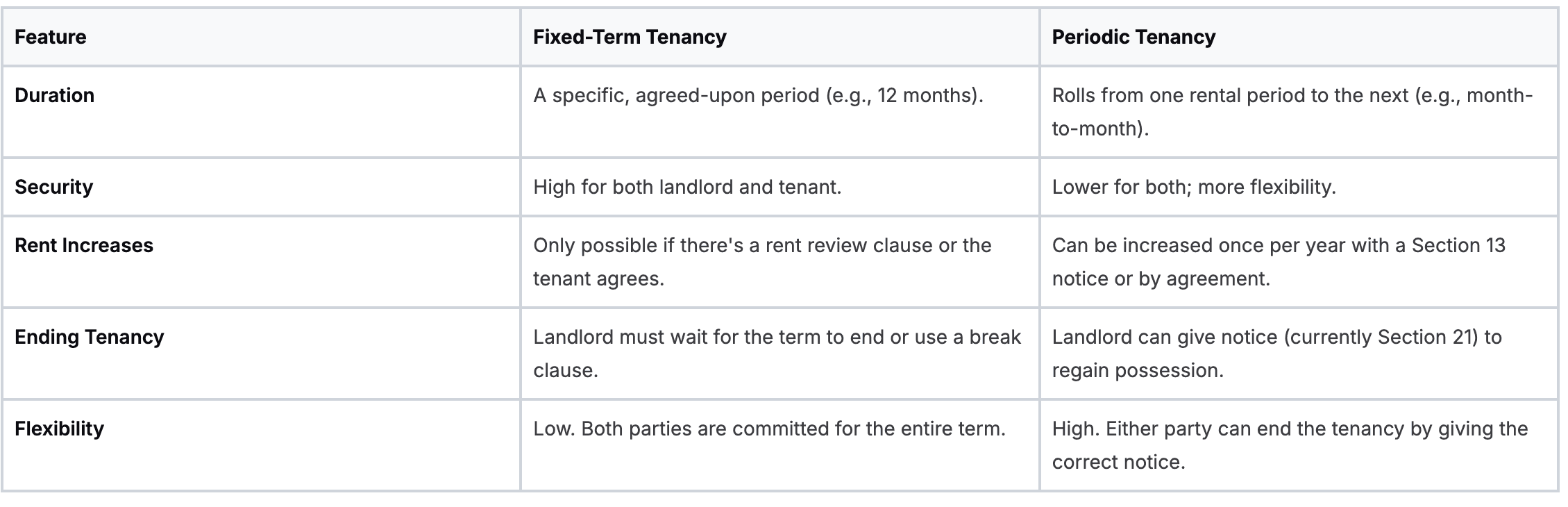
Fixed-Term Tenancy vs. Statutory Periodic Tenancy
To help you weigh up the pros and cons for your own situation, here’s a direct comparison of the two tenancy types.
Create an AST here for FREE!
Deciding between the two depends entirely on whether you prioritise stability or flexibility. However, it's crucial to understand that the entire rental landscape is about to shift dramatically.
This established structure is set for a monumental change. Historically, fixed-term tenancies have been the norm, accounting for 56% of UK rentals. However, government data highlights the instability inherent in the Private Rented Sector, where only 15% of households have lived in their homes for 10+ years, compared to 58% of owner-occupiers. You can explore more about these social housing statistics on the official government website. This underscores the rationale behind the upcoming Renters' Rights Act.
Once the new laws come into force, all new and existing tenancies will become periodic by default. This means every single clause in your current assured shorthold tenancy template will soon govern a rolling agreement. Making sure it’s crystal clear, fair, and legally watertight has never been more important.
How to Complete Your Tenancy Template Without Errors
Turning a blank assured shorthold tenancy template into a solid, legally binding contract can feel a bit like walking a tightrope. Every single detail matters. From names and dates to any special conditions you add, accuracy is non-negotiable. One small mistake could create a loophole that costs you dearly down the line.
But don't worry. With a methodical approach, you can get it right and have complete confidence in your agreement.
Think of it less like filling in a form and more like building a clear, unambiguous rulebook for the tenancy. It's a lot like putting together flat-pack furniture. If you rush, skip a step, or use the wrong screw, the whole thing ends up wobbly and unreliable. The same idea applies here—precision is everything.
The best way to start is by getting all your ducks in a row before you even look at the template. This simple bit of prep work will save you a ton of time and prevent frustrating errors.
Gather Your Essential Information
Before you begin, make sure you have these details ready to go:
- Full Legal Names: The complete names of all landlords and every tenant aged 18 and over. These need to match their official ID exactly.
- Property Address: The full, correct address of the rental property, including the flat number and postcode. No typos!
- Tenancy Dates: The exact start date of the tenancy. If it's a fixed-term agreement, you'll also need the precise end date.
- Rent Details: The monthly rent amount, the date it's due each month, and how you expect to be paid (e.g., bank transfer).
- Deposit Amount: The total security deposit the tenant is paying.
Having this information at your fingertips makes filling out the template a much smoother process, with far less chance of making a critical mistake.
Customising Your Agreement
A good template gives you the legal skeleton, but it's up to you to add the flesh and blood—the specific details that make the agreement unique to your property. This is your chance to include clauses that tackle common issues head-on and set clear expectations from day one.
For example, you might want to add custom clauses covering:
- Pets: A clause specifying whether pets are welcome. If they are, you can outline conditions, such as requiring a professional deep clean when the tenancy ends.
- Smoking: A straightforward no-smoking policy for the inside of the property.
- Gardening: If there's a garden, a clause that clearly defines the tenant's responsibilities for keeping it in good shape.
Key Insight: Your main goal here is to eliminate any grey areas. A clause saying "the tenant must keep the garden tidy" is far too vague and open to interpretation. A much better clause would state, "the tenant is responsible for mowing the lawn and weeding the flowerbeds regularly throughout the growing season."
Using a system that guides you through these customisations can be a game-changer. Rather than trying to draft legally sound text yourself, a service like Robot Lawyer simply asks you a series of questions and then generates the compliant clauses for you. This ensures your finished agreement is properly tailored to protect your investment.
This approach transforms a potentially complex legal task into a simple, step-by-step process. For related documents, it's also worth understanding the specifics of a rent deposit deed.
Common Landlord Pitfalls and How to Avoid Them

Create an AST here for FREE!
Being a landlord can be incredibly rewarding, but it’s easy to get tripped up by a few common mistakes. Even with the best intentions, a simple oversight can quickly snowball into a legal and financial headache. Let's walk through the most common traps and, more importantly, how you can steer clear of them.
One of the biggest blunders is grabbing an outdated or poorly written assured shorthold tenancy template. It’s tempting to download a generic document from the web, thinking it’s a quick fix. But these often miss the vital clauses that actually protect you, leaving your agreement full of holes when you need it most. An inadequate contract can make it almost impossible to deal with rule-breakers or get your property back.
Another classic mistake is messing up the tenancy deposit. The rules here are strict and non-negotiable. You have 30 days to protect the deposit in a government-backed scheme and give the tenant the official Prescribed Information. Get this wrong, and you could face a penalty of up to three times the deposit value. Crucially, it also stops you from using a Section 21 notice to regain possession until the issue is fixed.
Fulfilling Your Legal Obligations
Beyond the initial paperwork, you have an ongoing legal responsibility to provide a safe, habitable home. This is more than just good practice—it's the law. Ignoring property maintenance can lead to everything from council enforcement action to expensive claims from your tenants.
The scale of the problem is bigger than you might think. The 2023 English Housing Survey found that a staggering 11% of private rented homes had a Category 1 serious hazard. This really brings home just how vital it is to stick to the responsibilities laid out in your tenancy agreement.
These hazards aren't obscure technicalities; they include common problems like damp and mould, dodgy wiring, or a broken boiler. Conducting regular inspections and dealing with repairs quickly isn't an optional extra. It’s a fundamental part of being a landlord, and a clear maintenance clause in your AST sets the right expectations from day one.
The Safest Path Forward
So, how do you sidestep these expensive slip-ups? The key is to start every tenancy on the right foot, with a rock-solid legal foundation. That means ditching the risky generic templates and using a verified, current legal service instead.
- Deposit Protection: Create a bulletproof process for handling deposits. Make sure you protect the money and serve the correct paperwork every single time.
- Property Maintenance: Be proactive. Schedule routine property checks and respond to repair requests without delay. This keeps your property safe, your tenants happy, and you compliant.
- Legal Notices: If you ever need to regain possession, you must follow the correct procedure. That could mean using a Section 8 notice for a breach of the agreement or another valid legal route.
At the end of the day, a professionally reviewed assured shorthold tenancy template is your strongest line of defence. Using a trusted service like Robot Lawyer Limited takes the guesswork out of the equation. Our documents are compliant with the latest regulations and can be tailored to your specific needs, giving you the confidence that your investment is protected and your tenancy is fair and transparent.
Frequently Asked Questions About ASTs
With big changes on the rental law horizon, it's natural to have questions. Landlords often ask us about the nuts and bolts of using an assured shorthold tenancy template, so we've put together some quick, clear answers to the most common queries.
Getting these details right isn't just about ticking boxes; it's about making sure your tenancy is smooth, fair, and legally sound from day one.
Can I Still Use an AST Template After May 2026?
No. Come 1 May 2026, the Assured Shorthold Tenancy (AST) as we know it will be a thing of the past for new lets. The Renters’ Rights Act is set to introduce Assured Periodic Tenancies (APTs) as the new standard for all private tenancies in England.
If you have an active AST on that date, don't worry—it will simply roll over and convert into an APT automatically. So, while a rock-solid AST template is essential for any tenancy you start before then, you’ll need to switch to APT-compliant agreements for anything new from 1 May 2026 onwards. The terms you agreed in your AST will provide the foundation for that new rolling agreement.
What Happens if I Fail to Protect the Tenant's Deposit?
The penalties for failing to protect a tenant's deposit are something no landlord wants to face. If you don't secure the deposit in a government-approved scheme and give your tenant the official Prescribed Information within 30 days, the consequences are serious.
Here’s what you could be up against:
- Financial Penalties: Your tenant can take you to court and claim compensation of up to three times the value of their deposit.
- Eviction Hurdles: You completely lose your right to use a Section 21 notice to regain possession of your property. You can't issue one until the deposit is returned to the tenant, which can make ending a tenancy incredibly difficult.
This isn't a minor detail; it's a fundamental part of tenant protection law that’s here to stay. These rules will be just as strictly enforced under the new APT system, so getting deposit protection right is non-negotiable for every landlord.
How Can I Increase Rent During an Assured Shorthold Tenancy?
How you can increase the rent really comes down to what type of tenancy you have in place.
With a fixed-term tenancy, the rent is effectively locked in for the agreed period. You can only increase it if the tenant agrees to the new amount or if you included a specific 'rent review clause' in the original tenancy agreement from the start.
If you're on a periodic tenancy that rolls from month to month, you can raise the rent once a year. You can do this informally if your tenant agrees, or you can serve them a formal Section 13 notice to make it official. The upcoming Renters' Rights Act aims to make this even clearer, likely limiting rent increases to once per year using a single, standard legal process.
Don't leave your tenancy agreement to chance. With Robot Lawyer, you can create a legally sound, compliant AST in minutes. Our platform guides you through a simple questionnaire to generate a document that protects your investment and ensures a fair, transparent tenancy.Get started with your free 7-day trial and create your document today.