

If you run a small business, there's a good chance your contracts, handbook and payroll settings were drafted for a version of UK employment law that no longer exists. You hire someone, issue the same offer letter you used last year, and assume the basics still hold. Then a flexible working request lands on day one, your payroll costs jump, and an old NDA clause suddenly looks unsafe.
That's where many employers are now. The problem isn't only the volume of employment law updates. It's that the changes interact with each other. A right added at onboarding affects your handbook. A payroll rule change affects records, sickness handling and holiday administration. A tribunal deadline change affects how long you need to hold clear evidence after a disciplinary issue.
A practical approach matters more than a legal summary. You need to know what to change now, what to diarise for later, and what wording in your documents should be rewritten before it creates risk.
Create Legal Documents Here!
Keeping Pace with Unprecedented Change
At 9 a.m., you send an offer letter using last year's template. By lunch, your manager approves leave using an old rule. By the end of the week, payroll runs on settings that no longer match current obligations. That is how legal risk builds in a small business. Not through one dramatic mistake, but through ordinary admin that has not kept up.
The main driver is the Employment Rights Act 2025, which received Royal Assent on 18 December 2025. It introduces a wide set of reforms, and for small employers the practical point is simple. An annual handbook tidy-up is no longer enough.
The changes do not arrive all at once. They roll out across 2025 to 2027, and different parts of your HR process will need updating at different times. Contracts, onboarding, payroll, manager guidance, grievance handling, and exit documents all need separate checks. If you treat this as one legal project, something will be missed. If you treat it as a dated compliance plan, it becomes manageable.
Where small employers usually get caught out
In my experience, problems start in the gaps between documents and day-to-day practice. A contract says one thing, the handbook says another, and the manager does a third.
The pressure points are usually these:
- Offer packs that still refer to qualifying periods or outdated rights wording.
- Policies that are legally correct in part, but no longer match how managers make decisions.
- Payroll processes that have not been checked against current rates, leave rules, or record-keeping duties.
- Exit files that prioritise speed, but do not preserve the notes and evidence needed if a claim follows later.
A simple working rule helps. If a document or process has not been reviewed since this reform programme began, assume it needs checking.
For ongoing changes, keep one person responsible for monitoring updates and logging decisions. A dated review note is far more useful than relying on memory. A dedicated employment law news page can help, but it only works if someone turns each update into an action, owner, and deadline.
A practical toolkit for staying compliant
The businesses handling this well are not reading more legal commentary. They are using a tighter update process.
Start with four workstreams:
- Joiner documents. Check contracts, offer letters, probation wording, and onboarding materials.
- Core policies. Review flexible working, family leave, harassment reporting, disciplinary, and grievance procedures.
- Pay and records. Audit payroll settings, statutory payments, holiday records, and document retention periods.
- Exit controls. Update investigation templates, warning letters, dismissal wording, settlement terms, and evidence checklists.
Then attach a timetable to each one. What needs changing now? What needs draft wording ready before the rule takes effect? What needs manager training rather than policy text?
That is the difference between reacting to employment law updates and controlling them.
The Shift to Day-One Employee Rights
A new hire starts on Monday. On Tuesday, they ask for compressed hours so they can manage school drop-offs. If your manager replies, “You need to pass probation first,” you have a problem.
Several rights now need to be treated as available from the start of employment, including the right to request flexible working. That changes the risk point. The old habit of delaying requests until someone has “settled in” can leave you with inconsistent decisions, poor documentation, and avoidable disputes.
Create Legal Documents Here!
What changes in practice
This is less about legal theory and more about process design.
A line manager should no longer be deciding, from memory, whether a new starter can make a request or take a type of leave. HR needs a clear intake route, current policy wording, and a written response process that starts as soon as employment starts. If you leave this to informal conversations, you increase the chance of a manager saying something inaccurate or dismissive.
Three documents usually need updating first:
- Offer letters. Remove wording that suggests flexible working or family-related rights only arise after a period of service.
- Contracts of employment. Check that leave clauses, probation clauses, and cross-references to the handbook do not contradict current rights.
- Employee handbooks. Set out how requests should be made, who handles them, response times, and how decisions will be recorded.
Day-one rights checklist for joiners
Use this checklist for every new starter pack and onboarding process:
- Review qualifying-period wording. Delete outdated references where they no longer apply.
- Add a request channel. Give staff one email address or form for flexible working and family leave requests.
- Brief managers before the start date. A short script prevents improvised answers.
- Point new starters to the right policy. Include this in induction materials, not just the handbook.
- Log every request and response. Record dates, the decision-maker, the reason given, and any follow-up.
- Check status-sensitive documents. If you engage contractors as well as employees, keep role status paperwork separate and current, including an IR35 determination statement template where relevant.
That last point matters because small businesses often mix onboarding steps for employees, workers, and contractors. The legal tests are different, and muddled paperwork makes later disputes harder to defend.
Policy wording you can change now
Many handbooks still say things like “employees may become eligible” or “requests will usually be considered after probation.” Those phrases create avoidable confusion.
Use wording that matches the process you want managers to follow:
Suggested handbook wording: “Employees may make a flexible working request from the start of employment in line with the Company's Flexible Working Policy. Requests will be considered fairly, consistently, and in line with current legal requirements. Managers must not reject or discourage a request informally.”
That final sentence is useful. It closes a common gap between HR policy and line manager behaviour.
A short explainer can help if your team needs a visual overview before documents are redrafted:
What managers need to say, and avoid saying
Managers do not need legal training. They need a consistent response.
Use this script:
- Acknowledge the request. “Thanks for raising this.”
- Confirm the process. “We'll log it and review it under the policy.”
- Set expectations. “You'll get a written response after HR has considered it.”
- Stay neutral. Do not comment that the request is too early, inconvenient, unfair on others, or a problem during probation.
One careless sentence can create more risk than the request itself. The safest approach is simple. Update the wording, train the manager, and make sure every day-one request goes through the same documented process.
Managing Critical Pay, Leave, and Tax Adjustments
A small pay rise agreed in good faith can still leave you exposed if payroll is running on last year's settings. That is the problem many employers are facing now. The legal changes are straightforward on paper, but the risk sits in the payroll run, the SSP trigger, and the records you keep.
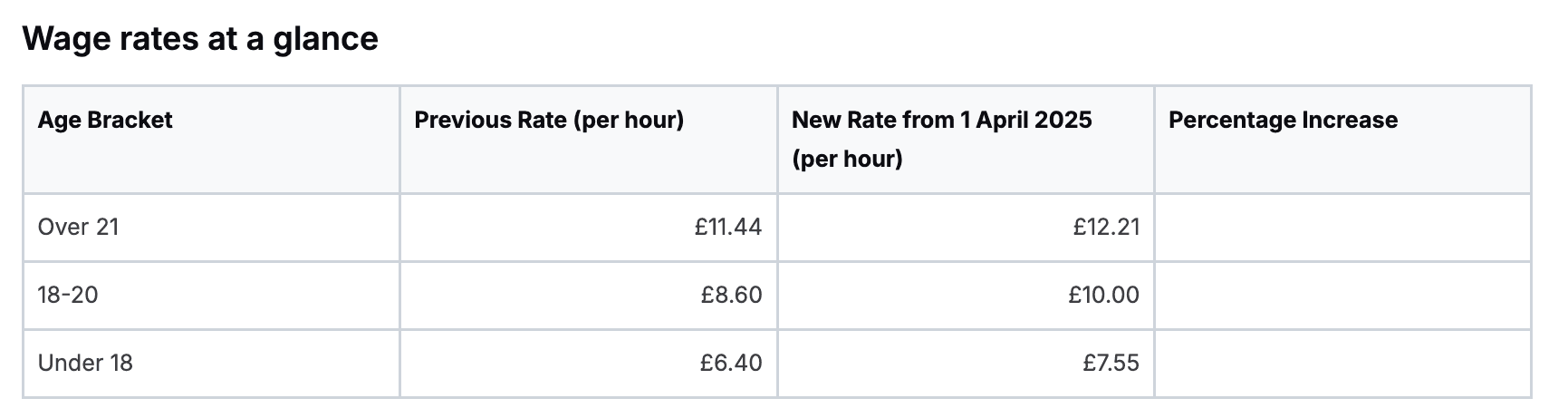
As of 1 April 2025, the National Living Wage for workers aged over 21 increased to £12.21 per hour from £11.44, the 18 to 20 rate rose to £10 from £8.60, and the under 18 rate increased to £7.55 from £6.40. Employer NIC secondary Class 1 contributions increased from 13.8% to 15% from 6 April 2025, and the employer NIC threshold fell from £9,100 to £5,000 annual earnings. The Employment Allowance also doubled from £5,000 to £10,500 and the previous £100,000 earnings threshold was removed for eligible employers, according to this guide to 2025 employment law changes.
Create Legal Documents Here!
The practical issue is not just the headline pay rate. It is the combined effect of higher wage floors, higher employer NIC, and a much lower NIC threshold. Part-time staff, junior workers, and seasonal hires can now create employer NIC cost where none arose before.
That catches employers out during recruitment and rota planning. A role that looked affordable six months ago may now need a different budget, fewer hours, or a price increase to protect margin.
Contractor arrangements deserve a quick review at the same time. If you engage freelancers or consultants, keep the status decision clear and recorded. A written IR35 determination statement template helps show how you reached the decision if HMRC asks later.
Leave and sick pay changes need system changes, not just policy updates
Another pressure point is holiday and SSP administration. From 6 April 2026, employers will need to keep adequate holiday pay records for six years, and there will be a new criminal offence for failing to do so. The same set of changes removes the lower earnings limit for Statutory Sick Pay, ends the three-day waiting period, and makes SSP payable from the first day of illness, as set out in this summary of upcoming UK employment law reforms from Moorepay.
If your payroll software still applies the old SSP rules, the problem is immediate. Lower earners may be missed, and absences may be underpaid from day one.
What to check now
Use this checklist with HR, payroll, finance, or your bureau:
- Hourly pay audit: Check every worker against the correct age band and effective date.
- Salary sacrifice review: Make sure deductions do not pull pay below the legal minimum.
- NIC settings: Confirm payroll uses the current contribution rate and threshold.
- SSP testing: Ask how the system will process first-day SSP and staff who previously fell below the earnings limit.
- Holiday pay records: Decide what records you will keep, where they will sit, and who is responsible for six-year retention.
- Agency and casual worker data: Confirm you receive enough pay and hours information to keep accurate records.
- Budget reforecast: Model wage and NIC changes together, not as separate issues.
Handbook and contract wording worth updating
Policy wording should match the process you can effectively run.
Suggested handbook wording: “The Company will calculate statutory payments, including sick pay, in line with current legal requirements and payroll rules in force at the relevant time. Employees must report absence promptly and provide any certification required under the Sickness Absence Policy.”
Suggested record-keeping wording: “The Company keeps pay, working time, and holiday pay records for the periods required by law. Managers must submit accurate holiday, overtime, and absence information to payroll within the stated deadlines.”
Those two clauses do useful work. They set expectations for staff and managers, and they help close the gap between policy and payroll processing.
Outsourced payroll does not remove the legal risk. It only changes who presses the button. You still need to approve the settings, spot errors early, and keep the records that prove you complied.
Strengthening Your Harassment Prevention Framework
Create Legal Documents Here!
A manager gets an informal complaint after a team social. No one wants to make it formal. The employee asks for it to be “kept quiet”, the accused is a strong performer, and there is no clear record of what was said or what happens next. That is the point where many small businesses create legal risk without realising it.
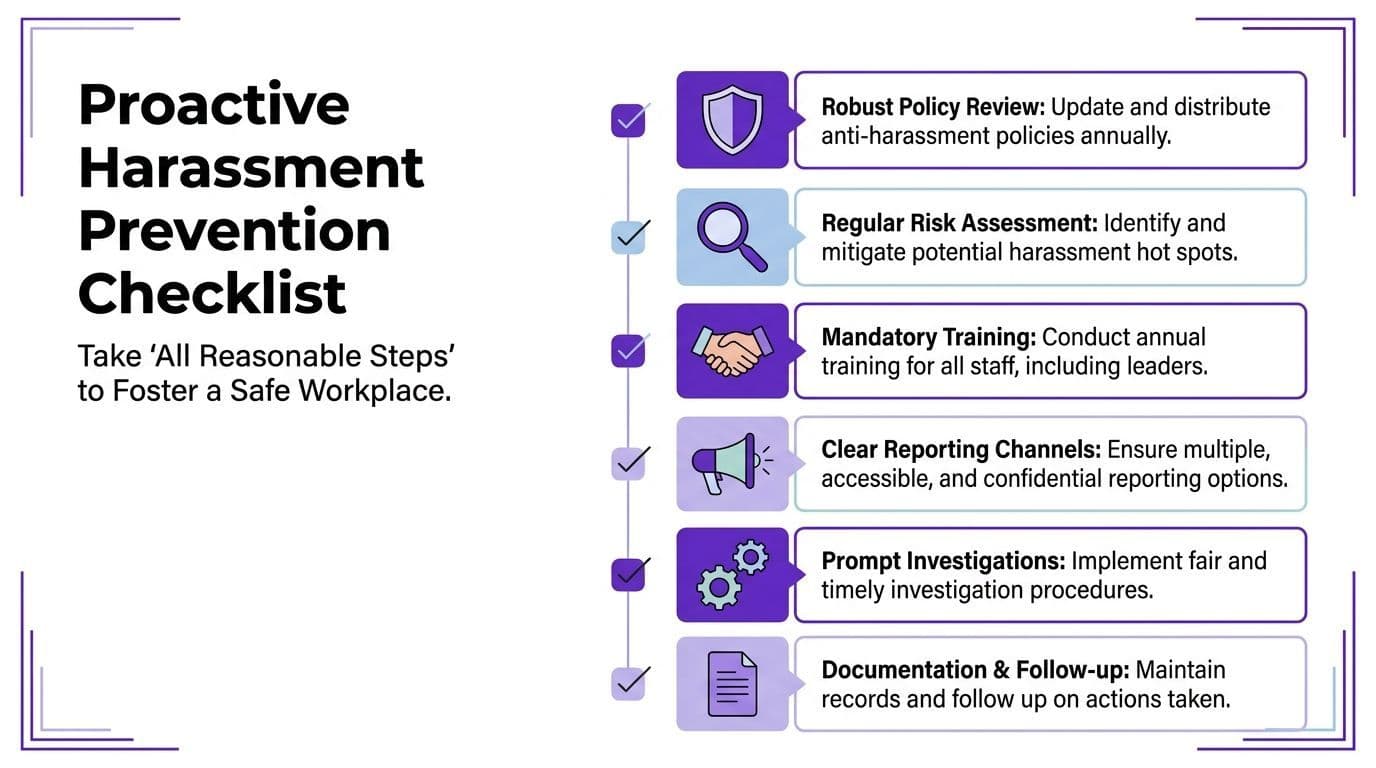
The legal test is shifting toward prevention and proof. A key change is set to take effect in October 2026, when the duty to prevent sexual harassment is expected to move from taking “reasonable steps” to taking “all reasonable steps”, as outlined in this 2026 employment law changes update. For employers, that raises the bar from having a policy to showing how the policy works in practice.
What all reasonable steps is likely to mean in practice
Start with evidence. If a claim lands, the question will not just be whether you had an anti-harassment policy. It will be whether you assessed where problems were likely to arise, trained the right people, offered safe reporting routes, responded properly, and kept records that show follow-through.
That matters long before any tribunal claim.
Employers usually have higher exposure in predictable places. Client entertainment, travel, lone working, night shifts, WhatsApp groups, junior staff managed by a single senior person, and social events with alcohol all need closer attention. A generic policy will not answer those risks on its own.
A workable framework should cover five areas:
- Policies that match each other: Anti-harassment, grievance, disciplinary, social media and whistleblowing rules should not contradict one another.
- Risk checks: Identify where staff may be isolated, dependent on one manager, or exposed to third parties.
- Manager training: Managers need separate guidance on receiving concerns, escalating them, and avoiding retaliation.
- More than one reporting route: Staff should not be forced to report through the person causing the problem.
- A documented response process: Set out who investigates, what is recorded, when updates are given, and how outcomes are communicated.
The NDA issue many employers have not fixed
This is one of the first drafting checks I would do. A business can spend time updating its harassment policy, then undermine that work by using old confidentiality wording in settlement agreements, investigation letters, or standalone NDAs.
The Victims and Prisoners Act 2024 affects the enforceability of confidentiality clauses where they seek to prevent certain disclosures about criminal conduct, including harassment-related matters in the right context. The government's Victims and Prisoners Act 2024 factsheets are a better reference point than recycled commentary. If your documents still suggest that staff must stay silent in all circumstances, the wording needs review.
A current equal opportunities policy template helps set the baseline standard for behaviour and reporting expectations, but it will not fix overbroad confidentiality clauses by itself.
Drafting warning: Old boilerplate is a real risk here. If your confidentiality wording is too wide, it may fail when challenged and it can make the business look as though it discouraged reporting.
Policy wording you can use now
Harassment policies should say what staff can do, what managers must do, and what the business will record. Keep the wording clear enough that managers can apply it under pressure.
Suggested reporting clause: “Employees may report concerns about harassment, sexual harassment, discrimination or victimisation to their line manager, another manager, HR, or through any other reporting route identified in this policy. Reports will be handled promptly, sensitively and as confidentially as the circumstances allow.”
Suggested legal disclosure clause: “Nothing in this policy, contract or agreement prevents any person from making a disclosure that is protected by law, including a report or disclosure relating to harassment, discrimination, victimisation or other unlawful conduct.”
Those clauses will not replace advice on a live dispute. They do give you safer starting language for handbooks, template letters and settlement document reviews.
A practical employer checklist
Use this as a short compliance audit for the next 30 days:
- Check your policies together: Harassment, grievance, whistleblowing, disciplinary and social media wording should align.
- Review reporting routes: Give staff at least one alternative to their line manager.
- Train managers first: Focus on what to do in the first 24 hours after a complaint.
- Audit confidentiality wording: Review settlement agreements, investigation templates and NDA clauses for overreach.
- Record action taken: Keep training logs, policy issue dates, investigation notes and outcome letters.
- Follow up after the case ends: Speak to the team, check for retaliation risks, and monitor whether the behaviour has stopped.
If you do only one thing now, do the document audit. It is usually the fastest way to spot the gap between what the handbook promises and what the business would do when a complaint arrives.
Managing Disputes and Exits Under New Rules
A manager decides on Friday that a new starter is “not working out” and wants them gone by Monday. Under the rules already in force and the changes expected next, that kind of quick decision carries more risk than many small businesses realise.
From 1 October 2026, the time limit for bringing most employment tribunal claims is due to increase from three months to six months. Looking ahead, by 1 January 2027, the qualifying period for unfair dismissal protection is expected to reduce from 24 months to 6 months, and the compensatory award cap is expected to be removed. If those changes take effect as proposed, weak process will become more expensive to defend.

Create Legal Documents Here!
Why dispute and exit risk is rising
Longer claim windows change how you keep records. A dismissal file may need to stand up months later, when memories are weaker and the manager involved may have moved on.
Earlier unfair dismissal protection changes the old habit of treating short-service employees as low risk. They are not low risk if the paperwork is thin, the reason is unclear, or the process shifts halfway through.
Removing the compensatory cap, if introduced as planned, would also change settlement strategy. Some employers will want to resolve disputes earlier. Others will need to be more selective about which cases they defend to hearing. The right choice depends on the documents, the manager witness, and whether the stated reason for dismissal matches the facts of the matter.
The standard to work to now
A fair exit starts well before the exit meeting.
Employers should be able to show four things. The employee knew what was expected. Concerns were raised at the time. The employee had a proper chance to respond. The final decision was consistent with your policy and with similar cases.
That is what tribunals tend to examine in practice. They look for dated notes, meeting records, investigation material where relevant, warning letters, and a clear explanation of why dismissal happened when it did.
The best dismissal file is usually the least dramatic one. It reads clearly, follows the policy, and does not need creative explanation later.
What to review in your documents now
Use this as a practical document check before any dispute or exit lands on your desk:
- Probation clauses: Make clear that probation allows review and support, not dismissal without any process.
- Disciplinary and capability procedures: Separate conduct issues from performance issues so managers do not mix the two.
- Invitation, warning and outcome letters: Check that templates explain allegations or concerns, evidence considered, the decision, and appeal rights.
- Appeal wording: Confirm who hears appeals and how quickly they should be arranged.
- Settlement agreement templates: Review confidentiality and protected disclosure wording before using old forms.
- Record retention practice: Decide where investigation notes, emails, meeting minutes and signed letters are stored.
If your managers use email shortcuts instead of templates, fix that first. In tribunal claims, inconsistent emails often do more damage than an imperfect policy.
Updated policy language you can use
Plain wording helps managers follow the process under pressure.
Suggested probation wording: “During probation, the Company will review performance, conduct, attendance and suitability for the role. Where concerns arise, the Company may meet with the employee, set expectations for improvement, and confirm outcomes in writing before deciding whether employment should continue.”
Suggested dismissal process wording: “No decision to dismiss will be made until the employee has been informed of the concern, given an opportunity to respond, and told of any right of appeal, except where immediate action is justified by gross misconduct or another serious and documented reason.”
That wording does not remove the need for legal advice on a live case. It gives you safer baseline language for contracts, handbooks and manager templates.
Exit mistakes that create avoidable claims
These are the patterns that usually cause trouble:
- Backfilled notes: Records written after dismissal to make the process look fuller than it was.
- Unclear reasons: Managers saying “attitude” verbally, then issuing a letter about performance.
- No appeal route: Treating the decision as final because the employee has short service.
- Single-manager exits: No HR or senior review before dismissal.
- Probation shortcuts: Assuming probation means fairness standards do not apply.
A short internal checklist helps here. Before any dismissal is confirmed, ask: What is the reason? What evidence supports it? What policy applies? Has the employee responded? Who reviewed the decision? If a manager cannot answer those questions clearly, the dismissal is not ready.
The practical message is straightforward. Start tightening exit process now, before the proposed 2027 changes arrive. Businesses that document concerns early, use consistent letters, and review dismissals properly will be in a much safer position than those still relying on verbal warnings and rushed decisions.
Your 2026-2027 Compliance Action Plan
It is January. A manager has hired someone, payroll has run, and you are still using last year's handbook because no one is sure which version is current. That is how small compliance gaps turn into expensive ones.
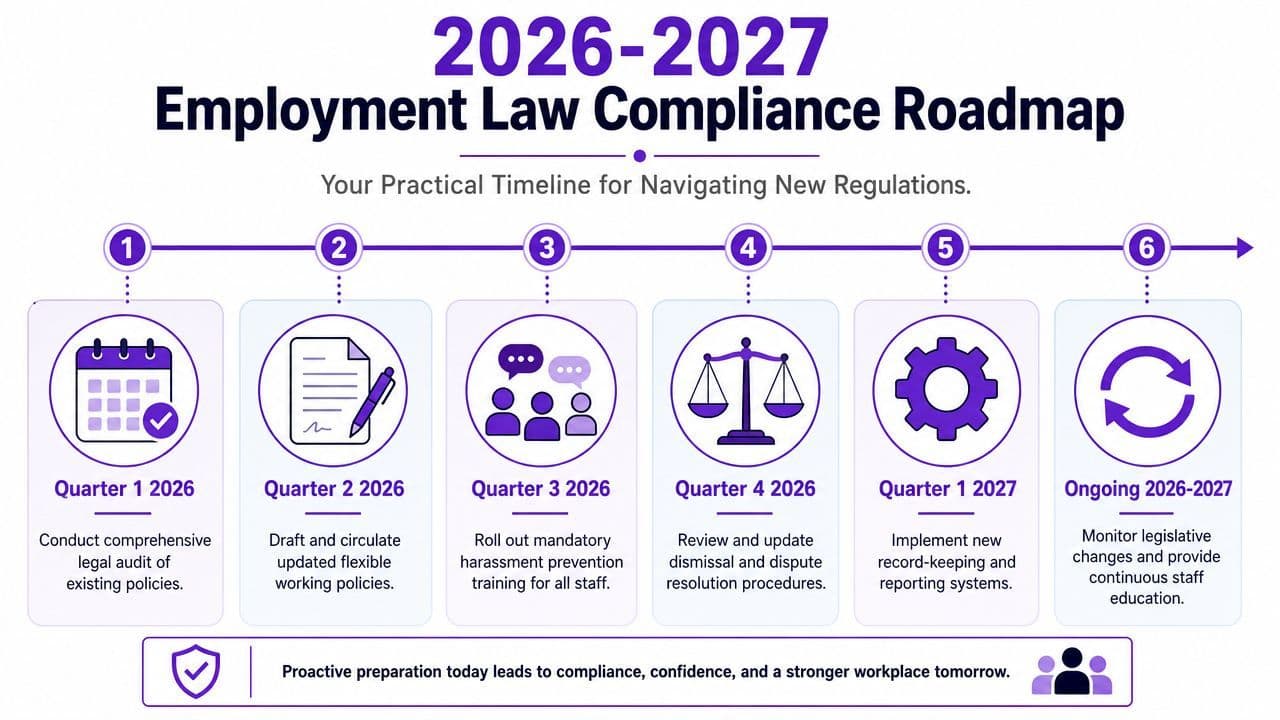
A workable plan needs dates, named owners and documents you can point to. If you cannot say who is updating contracts, who is checking payroll settings, and who is auditing records, the work will drift.
Create Legal Documents Here!
Immediate priorities
Start with the items that affect current staff, current pay runs and current manager decisions. Leave the bigger rewrite projects until the basics are under control.
- Contracts and handbook: Update joiner documents so day-one rights, reporting routes and policy references match your current position.
- Payroll setup: Confirm pay bands, NIC treatment, SSP settings and holiday pay calculations with your payroll provider or finance lead.
- Manager instructions: Issue a short written briefing on requests, conduct concerns, escalation points and when HR or external advice is needed.
- Record map: Decide where holiday pay, leave and related payroll records will sit, who can access them, and how retention will be checked.
One practical point matters more than it sounds. Get to one approved version of each document. If managers are pulling letters and policies from old folders, your legal position weakens before a dispute even starts.
Mid-term preparation
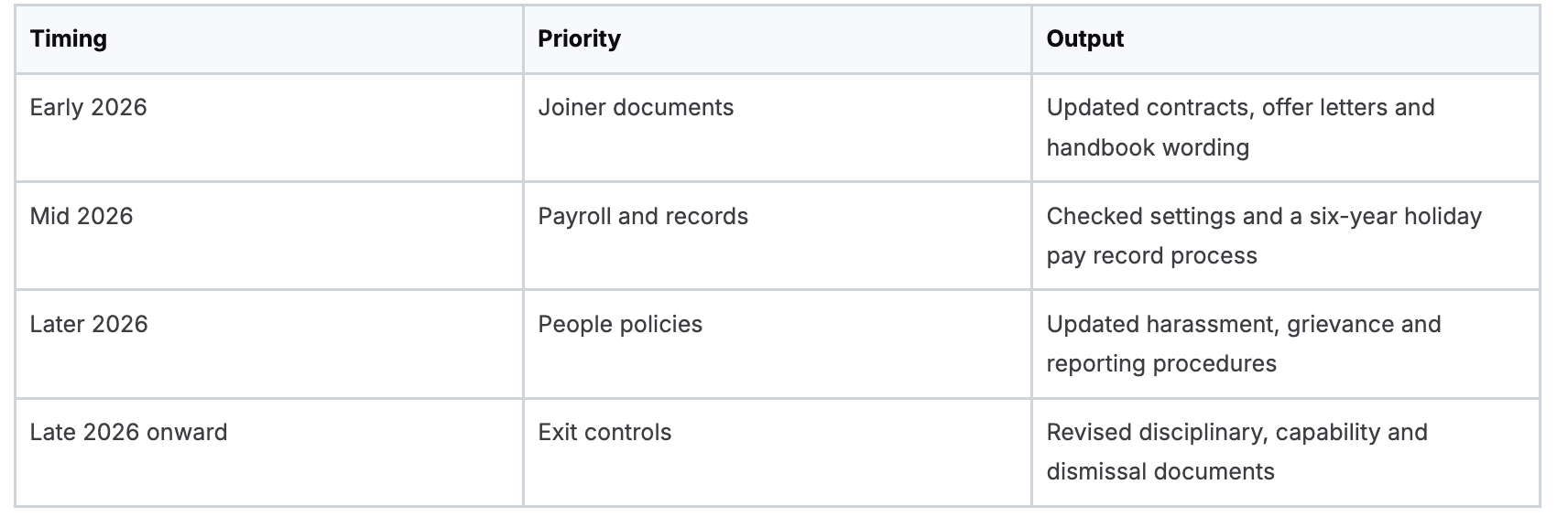
The next stage is policy control and evidence. By mid-2026, you want updated wording, training records and a clear audit trail showing what changed and when.
That usually means three jobs. Refresh core policies. Train managers on the changes. Check that templates, forms and payroll processes all match the same rules. Harassment prevention should stay high on the list, but this section is about execution: who is drafting the policy, who is approving it, and what proof you will keep that staff were told.
Use a simple implementation grid:
Create Legal Documents Here!
Record-keeping changes to action now
Put 6 April 2026 in the diary. As noted earlier, employers are expected to keep adequate holiday pay records for six years, and failures in this area can carry serious enforcement risk, including criminal exposure.
Treat that as an operational task, not just a legal note. Check whether your payroll system shows how holiday pay was calculated, whether records can be retrieved by employee, and whether someone tests retention before old data disappears. If your answer is "the software should have it," that is not a control.
A short checklist helps:
- Can you show how holiday pay was calculated?
- Can you retrieve the record without relying on one employee's inbox?
- Is there a retention rule set for six years?
- Has one person been told to check this quarterly?
- Do your handbook and payroll process describe the same approach?
Updated wording you can use
Many small businesses get stuck because they know a policy needs changing but do not know what to write. Start with plain wording and tailor it to your setup.
Holiday pay and records policy line:
“We keep pay, holiday and working time records for the period required by law. Managers and payroll staff must record leave accurately and correct errors promptly.”
Manager handbook line:
“Do not give off-the-cuff answers on statutory rights, pay, leave or dismissal. Use the current template documents and escalate uncertain cases for review.”
Those lines will not replace legal advice on a difficult case, but they give you a safer base for contracts, policies and manager guidance.
A simple ownership model
Even in a small business, split the work clearly:
- HR or office manager: contracts, handbook, policy issue dates and staff communications
- Finance lead or payroll contact: wages, NICs, SSP, holiday pay records and retention checks
- Senior manager or founder: approval, budget, training attendance and follow-up
- External adviser: document review on specialist points such as settlement terms, NDAs or higher-risk exits
Good compliance is usually quiet. The right document is in use. Payroll is set correctly. Managers know when to stop and ask. Records are there when you need them. That is the standard for 2026 and 2027.
Future-Proofing Your Employment Practices
The current round of employment law updates has a clear message. Static documents are no longer safe. If your contracts and policies were written once and then left alone, they'll drift out of line with the law faster than most employers expect.
The biggest changes all point in the same direction. Rights arise earlier. Payroll and record-keeping demand more precision. Harassment prevention requires stronger evidence. Dismissal decisions need better documentation and a longer defensive horizon. None of that is impossible for a small business. But it does require discipline.
What resilient employers do differently
The businesses that cope best usually do four things well:
- They review documents proactively instead of waiting for a dispute.
- They train managers effectively and regularly rather than assuming common sense is enough.
- They keep clean records because memory won't defend a claim.
- They treat legal updates as operational changes affecting payroll, culture and workflow.
That approach is more efficient than firefighting. It also builds trust internally. Employees notice when policies are clear, decisions are consistent and managers know what to do.
Compliance can be a business advantage
A lot of owners treat employment compliance as dead weight. In practice, a well-run system saves time, reduces confusion and makes decisions easier. It shortens arguments about what the rules are. It gives managers scripts to follow. It lowers the chance that one careless clause or one weak dismissal note becomes an expensive problem later.
Good employment documents don't just protect you in a dispute. They make day-to-day management easier before any dispute starts.
That's why modern document management matters. The old model of storing one handbook PDF and hoping it still works next year is fading. Businesses now need employment contracts, policies and supporting letters that can be reviewed and updated quickly when the law changes.
If you need a faster way to keep contracts, policies and workplace documents up to date, Robot Lawyer offers AI-powered legal documents verified by qualified professionals. For employers, that can mean quicker updates to contracts of employment, policies and other HR paperwork without the usual delay and complexity of starting from scratch each time the rules move.