
Contract Management Automation for UK Startups
Your contracts probably live in five places right now. A draft in Word. A signed PDF in email. A tenancy agreement in a shared drive. An NDA copied from an old file. A note in your head to “check that renewal next month”.
That setup feels manageable until business gets busy. Then a client asks for the latest version, a landlord needs a document tonight, or a new hire is waiting for an employment contract while approvals crawl through inboxes.
For many UK startups, contract work isn't hard because the documents are always complex. It's hard because the process around them is messy. Files get renamed. Clauses drift from the approved wording. Deadlines rely on memory. One small mistake can create a bigger legal or operational problem later.
Contract management automation fixes that process problem. It gives small businesses a practical way to create, track, approve, sign, store, and revisit contracts without treating every agreement like a one-off fire drill.
The End of Contract Chaos
A founder signs a new client on Monday morning. By lunch, they need an NDA out the door, a freelancer agreement updated, and a landlord question answered about an Assured Shorthold Tenancy. None of these jobs is unusual. The trouble starts when every document follows a different path.
The NDA comes from an old template saved as “final latest”. The freelancer agreement gets emailed to two people for comments, and both edit different versions. The tenancy document sits in a folder no one has organised properly. By the end of the day, the founder hasn't done much legal work. They've spent most of their time hunting, checking, copying, and chasing.
That's where many small businesses get stuck. Manual contract handling creates friction in places that should be routine.
- Drafting slows down: You reuse old wording because starting from scratch takes too long.
- Approvals go missing: Someone forgets to reply to the email thread, so the deal stalls.
- Signed copies scatter: The final version ends up in an inbox instead of a reliable system.
- Dates get missed: Renewals, notice periods, and review points depend on memory.
Practical rule: If your contract process depends on one person “just remembering”, it isn't a process yet.
Contract management automation turns that chaos into a repeatable system. Instead of treating each document as a standalone task, the software handles the routine parts consistently. It can start from a trusted template, send the draft to the right person, collect signatures, store the signed version, and remind you when something important is coming up.
For a small business, that doesn't need to mean an expensive enterprise rollout. It can be a simple digital workflow that replaces scattered files and inbox chains with a clearer process. If you want a sense of how a guided document workflow works in practice, Robot Lawyer's process overview shows the kind of step-by-step experience modern legal automation can provide.
Automate your contracts here!
What Is Contract Management Automation
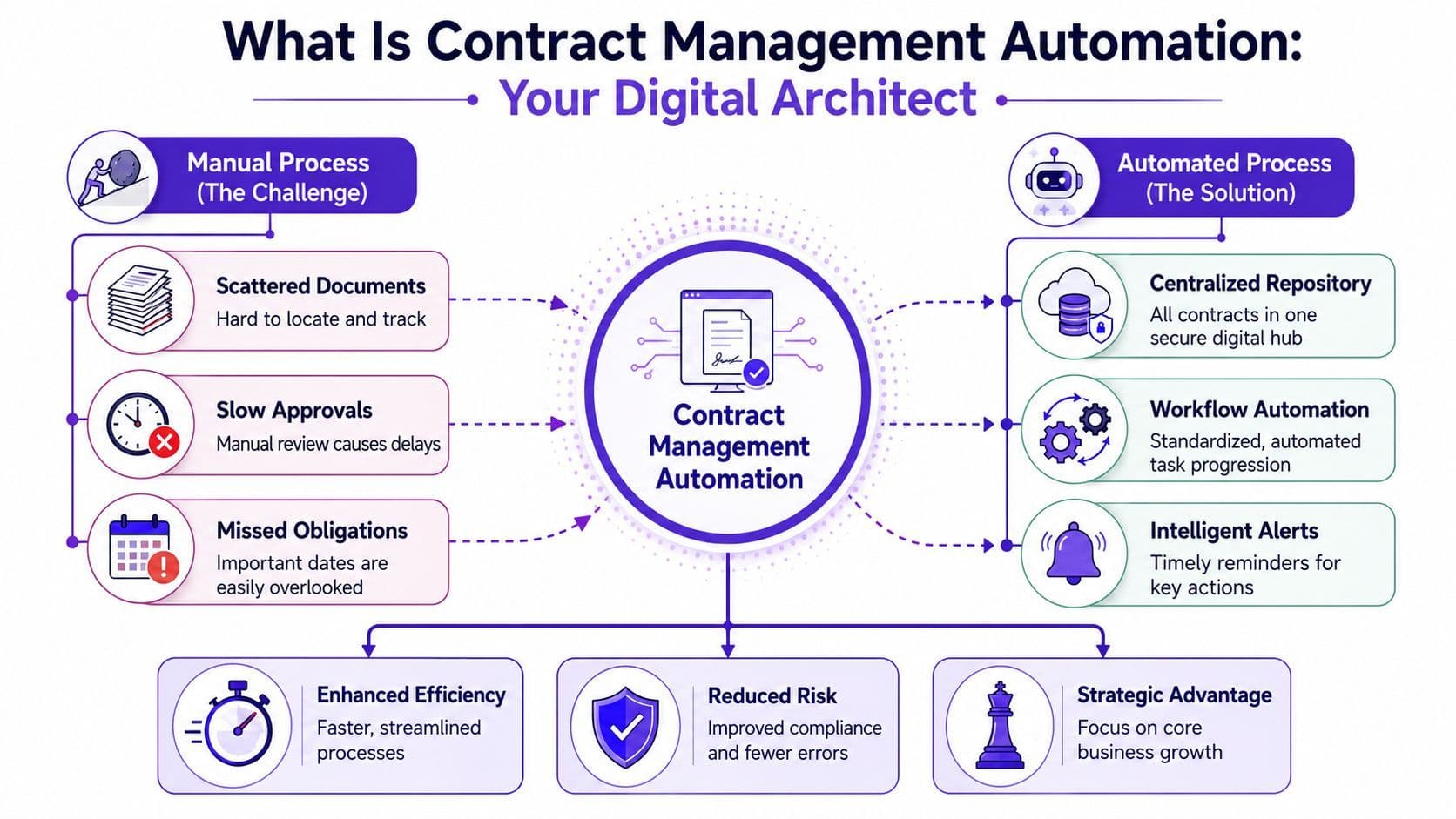
Contract management automation is software that helps you handle contracts from start to finish with less manual effort. That includes drafting, approving, signing, storing, searching, and tracking what happens after signature.
A simple way to think about it is this. It's part digital legal assistant, part filing clerk, part reminder system. It doesn't replace legal judgment, but it does take care of the repetitive work that usually eats your afternoon.
Automate your contracts here!
More than storage
Some business owners hear “contract software” and think of a glorified folder. Good automation does much more than store PDFs.
It helps you:
- Create contracts from approved wording so you're not copying random old files
- Route documents for approval without relying on email chasing
- Track versions so people stop editing the wrong draft
- Collect signatures digitally in a cleaner, faster way
- Set alerts for key dates such as renewals, notice periods, or review deadlines
That matters because the main pain usually isn't writing one contract. It's managing the whole lifecycle once you have dozens of them.
Why more businesses are adopting it
This isn't a niche tool anymore. According to Aavenir's contract management statistics roundup, by 2027, nearly 50% of all procurement contract management activities will be AI-enabled. The same source says this shift is already driving a 39% reduction in overall contract lifecycle time, while 61% of organisations have yet to implement AI-powered solutions.
For a startup, that gap matters. Big firms may have in-house legal teams and dedicated operations staff. Smaller businesses usually don't. Automation gives them a way to move faster without adding headcount just to push documents around.
A good automated system doesn't make contracts less important. It makes the important parts easier to control.
What it doesn't do
Readers often get confused: contract management automation doesn't mean software can make every legal decision for you. It can't decide whether a risky clause is commercially acceptable for your business. It can't negotiate on your behalf with real judgment.
What it can do is remove the repetitive admin that gets in the way of those decisions. That's why it's so useful for common business documents like NDAs, employment contracts, service agreements, and tenancy paperwork. You keep the human judgment where it belongs, and you stop wasting time on avoidable process failures.
The Core Capabilities of Automated Systems
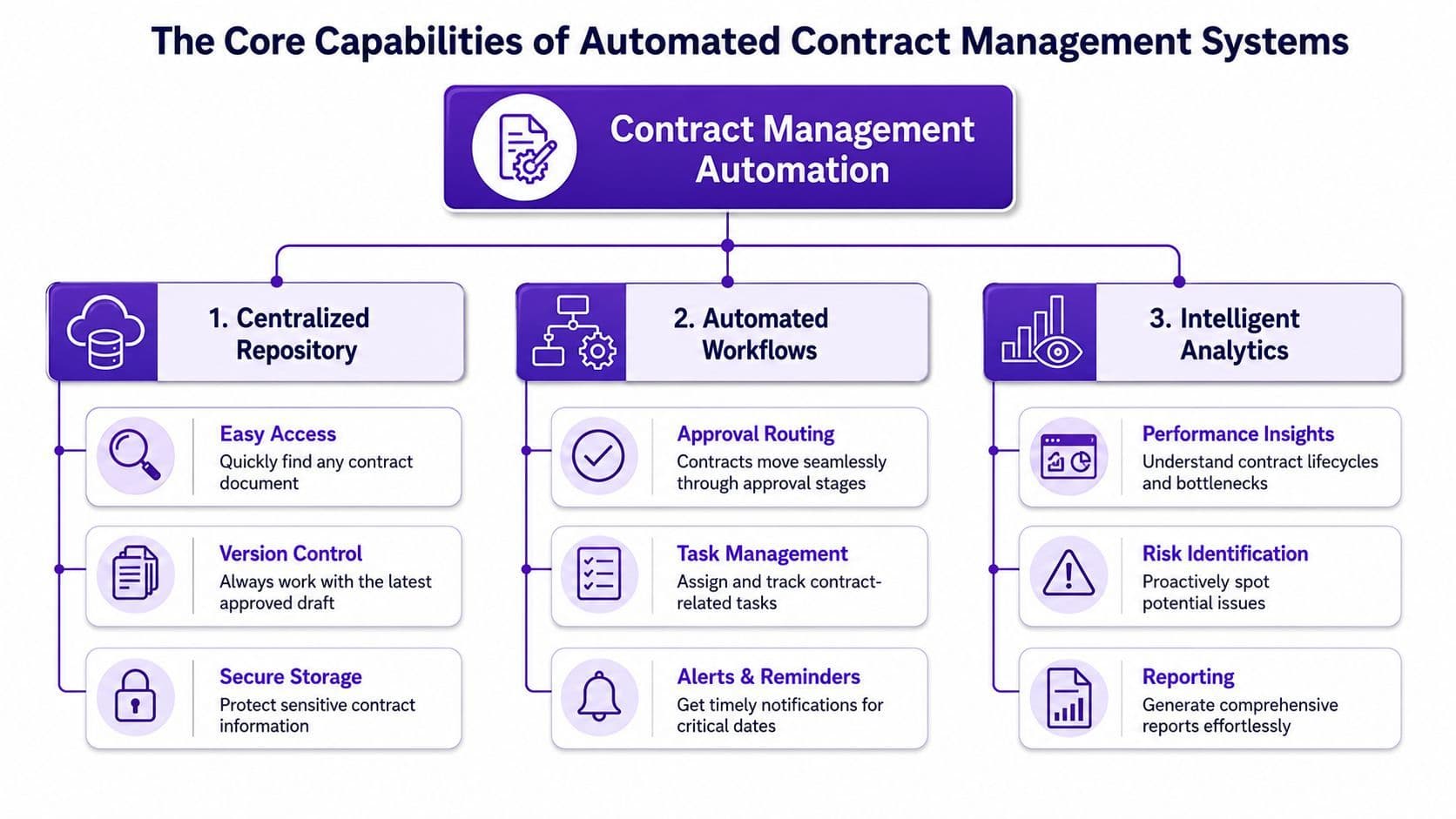
Most contract tools sound impressive in a demo because they list lots of features. What matters more is what those features do for a small business on a Tuesday afternoon.
Automate your contracts here!
Clause libraries and templates
A clause library is a bank of approved wording for common sections in your contracts. Instead of lifting text from old documents, you build from language you trust.
Before automation, a founder might reuse an old NDA and forget that the confidentiality period or governing law clause needs updating. With a clause library, the document starts from the right wording.
That gives you two practical benefits:
- Consistency: Your contracts stop drifting away from your preferred terms.
- Speed: Routine documents take less effort to prepare.
This is especially helpful for repeat documents such as employment contracts, service agreements, and basic commercial terms.
Data extraction from existing contracts
One overlooked problem is that many businesses already have contracts, but the useful information inside them is trapped in PDFs. Dates, party names, notice terms, and renewal rules may exist, but no one can find them quickly.
Automation tools can pull key details out of uploaded documents and turn them into searchable data. That means you're no longer opening files one by one to answer a simple question.
A small letting business, for example, may want to know which tenancy agreements need attention this month. Without automation, someone checks each file manually. With extraction, the system can organise those dates and terms in one place.
Automated workflows and approvals
Approval routing is where a lot of delay hides. One contract might need a founder's sign-off. Another needs finance to check payment terms. A third needs HR to confirm wording before issue.
Without automation, the process often looks like this:

Automate your contracts here!
This kind of workflow matters because speed isn't just about convenience. When approvals move cleanly, sales contracts close faster, hiring documents go out sooner, and operational bottlenecks stop spreading into the rest of the business.
The best workflow is usually the simplest one. If a document only needs one reviewer, don't build a maze around it.
Central repository and version control
A central repository is one secure home for all contracts. That sounds basic, but it solves a constant small-business problem. People stop asking, “Who has the signed copy?” or “Which version did we send?”
Version control is the second half of the benefit. It keeps teams from editing outdated drafts and gives a clear record of changes. For businesses with remote staff, freelancers, or external advisers, that can remove a surprising amount of confusion.
E-signatures and integrations
Digital signature tools let contracts move from approval to execution without printing, scanning, or chasing physical paperwork. That's useful for fast-moving client work, remote hiring, and landlord or tenant arrangements where timing matters.
Integrations add another layer of convenience. A contract tool that connects with your CRM, HR system, or accounting workflow reduces double entry. Client details can flow into a draft automatically instead of being typed over and over.
For startups, that's often the point where contract management automation starts feeling less like “legal tech” and more like normal business infrastructure.
The Business Case for UK Startups
Small businesses rarely struggle because they lack effort. They struggle because the founder, ops lead, or office manager is wearing too many hats at once. Contract admin becomes one more drain on time, and it often hides in plain sight.
A missed renewal. An outdated clause. An agreement stuck waiting for approval. None of these problems looks dramatic on its own. Together, they slow growth and add risk.
Why the numbers matter
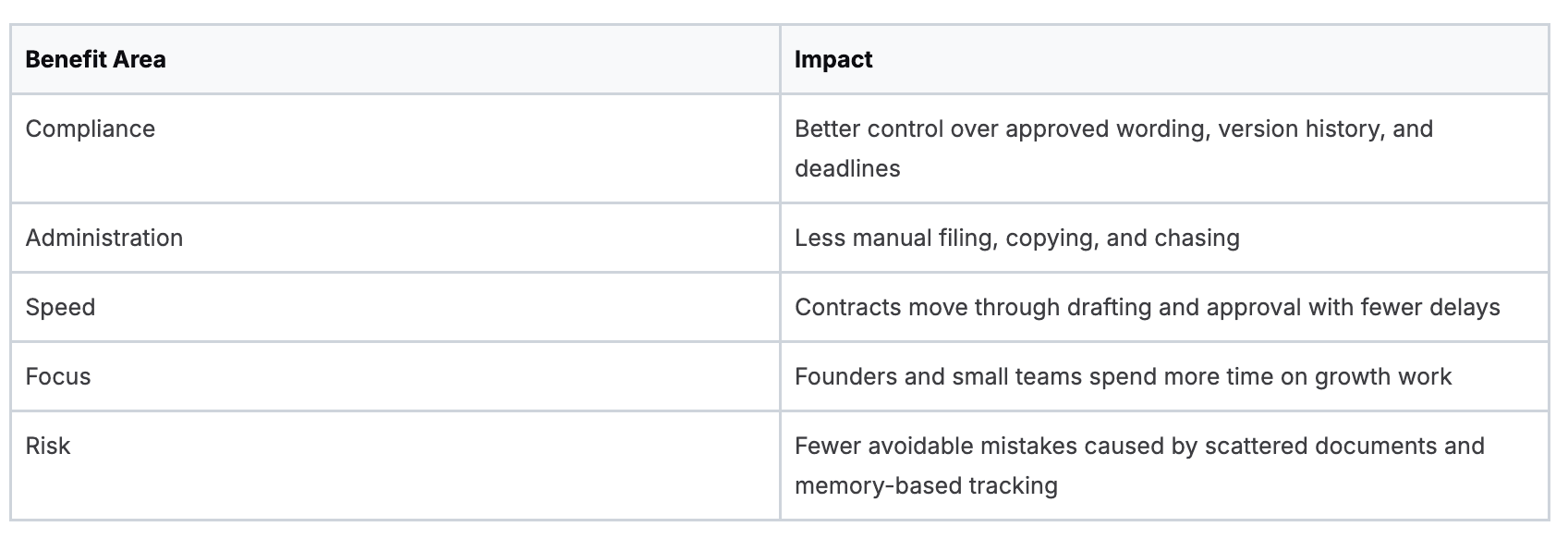
For UK businesses, the case for automation isn't only about convenience. It's also about compliance and cost. According to Yousign's analysis of contract management, organisations that implement automated contract management systems experience 73% higher compliance rates. The same source says these workflows reduce administrative costs by 25-30%.
That combination matters for startups. Compliance failures can create outsized problems when your business is still small. Administrative cost matters because every hour spent chasing paperwork is an hour not spent on customers, product, hiring, or revenue.
What that looks like in practice
A founder doesn't need a huge legal department to feel the benefit. They usually notice it in day-to-day operations first.
- Sales moves faster: Client agreements get prepared and signed without endless back-and-forth.
- HR becomes more organised: Employment contracts and policy documents follow a repeatable path.
- Landlord paperwork gets easier: Key dates and signed tenancy documents become easier to track.
- Routine legal spend drops: Teams can handle standard documents more confidently before escalating anything unusual.
Here's a simple way to view the return.
Automate your contracts here!
There's also a strategic angle. Startups often compete against larger companies that have more staff and more process support. Automation helps narrow that gap. It gives a smaller team a more organised operating model without requiring enterprise software budgets or full-time legal operations staff.
Cost questions startups usually ask
The most common concern is simple. “Will this become another expensive system we don't use?” That's a fair question.
The answer depends on fit. If you buy a tool built for a multinational legal department, you'll probably overpay and underuse it. If you choose something designed for smaller organisations, the value tends to come from doing a handful of repeat tasks very well.
That's why pricing transparency matters. A startup should be able to compare the likely cost of a tool with the time it currently loses to drafting, checking, filing, and following up. If you're weighing options, Robot Lawyer's pricing page is an example of the kind of straightforward subscription structure many smaller businesses prefer over opaque enterprise quotes.
Your Implementation Checklist
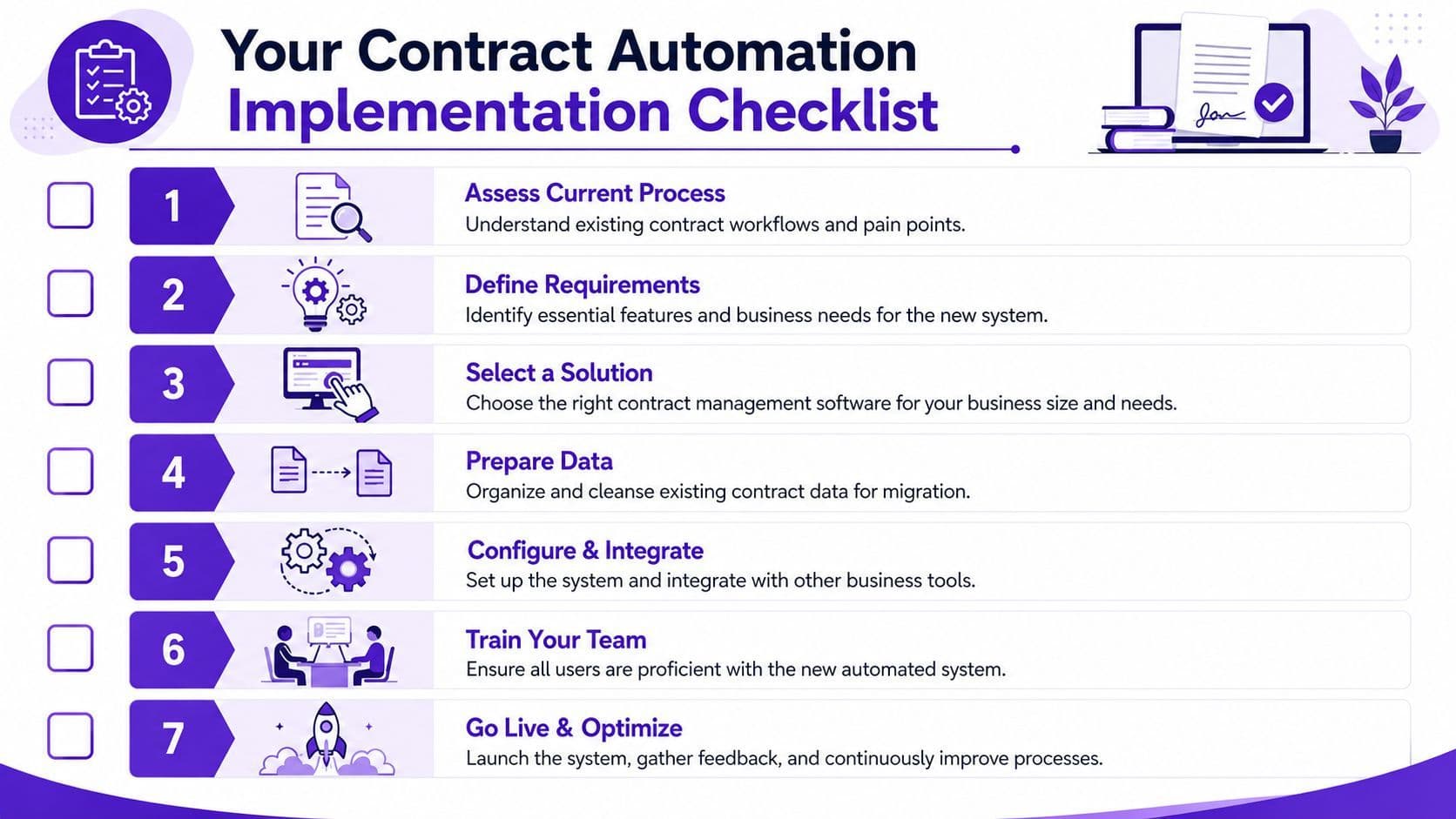
The easiest way to fail with contract automation is to treat it like a giant transformation project. Most small businesses don't need that. They need a manageable rollout that fixes a few recurring problems first.
Automate your contracts here!
Start with your bottlenecks
Look at where contract work currently slows down.
Ask questions like:
- Where do drafts come from
- Who has to approve them
- Where do signed versions end up
- Which dates are easy to miss
- Which contract types create the most admin
For one business, the answer may be NDAs and client service agreements. For another, it may be employment contracts or tenancy renewals. Don't automate everything at once. Start with the documents that cause the most repeat friction.
Define your minimum useful setup
Many tools offer more capability than a startup needs. That can be a trap. A better approach is to choose the smallest setup that would still solve your real problem.
A sensible first phase often includes:
- One approved template set for your most common document type
- A simple approval path for the people who need to review
- Central storage so signed copies stop disappearing
- Date reminders for renewals, notice periods, or follow-up actions
Good first target: automate the contract type your team touches most often and argues about least.
That might be a standard NDA, a basic employment contract, or a common customer agreement. Once the team trusts the workflow, you can add more documents.
Prepare your existing documents
This part is boring, but it matters. If your current files are disorganised, the new system won't magically fix bad inputs.
Spend some time cleaning up:
- Duplicate drafts
- Outdated templates
- Missing signed copies
- Unclear file names
- Contracts with no obvious owner
You don't need perfection. You do need a decent starting point.
Train the people who will actually use it
The most polished workflow fails if your team still sends contracts through old email habits. Keep training practical. Show staff how to create a draft, request approval, sign, and find the final version.
For a very small company, that may be a quick internal walkthrough. For a larger startup, you may want a short written playbook so new joiners follow the same process.
Measure success with a few useful metrics
You don't need a dashboard full of vanity metrics. Track a small number of outcomes that show whether the change is working.
According to Sirion's contract management ROI benchmarks, AI-driven automation can deliver a first-year ROI exceeding 300%, while reducing contract lifecycle completion time by 39%, cutting administrative time by 50–70%, and enabling teams to handle 44% higher contract volumes.
For a startup, that means success usually looks like this:
- Contracts go out faster
- Routine admin takes less staff time
- The team can handle more agreements without adding people
- Fewer documents get lost or delayed
You don't need to hit a benchmark overnight. You do need to see whether your team is spending less time on repetitive contract work than it did before.
Navigating Legal and Security Concerns
Putting legal documents into software can feel risky at first. That reaction is sensible. Contracts hold sensitive information, and no business owner wants convenience at the expense of security.
Data protection and access control
A reputable platform should protect contract data with strong security practices and clear access controls. In plain terms, that means the right people can access the right documents, and everyone else can't.
For UK businesses, data protection also means thinking about UK GDPR responsibilities. If a provider processes personal data for you, its terms around handling that data should be clear and easy to review. One useful example is a data processing agreement from Robot Lawyer, which shows the kind of document businesses often look for when assessing a legal tech provider.
Are e-signatures valid
This question comes up often, especially with founders who are used to printing documents “just to be safe”. In many routine business situations, electronic signatures are widely used and accepted in the UK.
The practical issue usually isn't whether a digital signature feels formal enough. It's whether your signing process is organised, traceable, and attached to the right final version of the contract.
Automation can improve compliance
Some people assume automation makes legal compliance weaker because software feels less careful than a lawyer reading every line. For routine documents, the opposite is often true.
A good automated workflow can help by:
- Using approved templates rather than random internet copies
- Reducing version confusion so teams don't sign the wrong draft
- Prompting reviews at the right time instead of relying on memory
- Keeping a record of what was signed and when
That doesn't remove the need for legal judgment on unusual matters. It does reduce the ordinary human errors that cause many avoidable contract problems.
Taking the Next Step with Smart Automation
Contract management automation works best when it solves a real business headache, not when it tries to look futuristic. For a UK startup, the point is simple. You want contracts to move faster, stay organised, and create fewer compliance headaches.
Automate your contracts here!
That's why the strongest starting point is often a hybrid model. Automation handles the repeatable work. A qualified professional checks the parts where legal confidence matters most. You get speed without pretending software should make every judgment call on its own.
For small businesses, that balance is often more realistic than choosing between two extremes. One extreme is doing everything manually. The other is relying on a fully self-serve tool for documents that may still need a human eye. A blended approach is often the safer route, especially for employment terms, tenancy agreements, commercial contracts, and founder paperwork.
Smart legal automation doesn't ask you to trust blindly. It gives you a faster process and a cleaner point for human review.
If you want to see how that model looks in action, this short video gives useful context before you try a platform yourself.
The best next step isn't to automate every contract in your business tomorrow. It's to pick one document type that causes regular friction, move it into a structured workflow, and build from there. Once that process works, expansion becomes much easier.
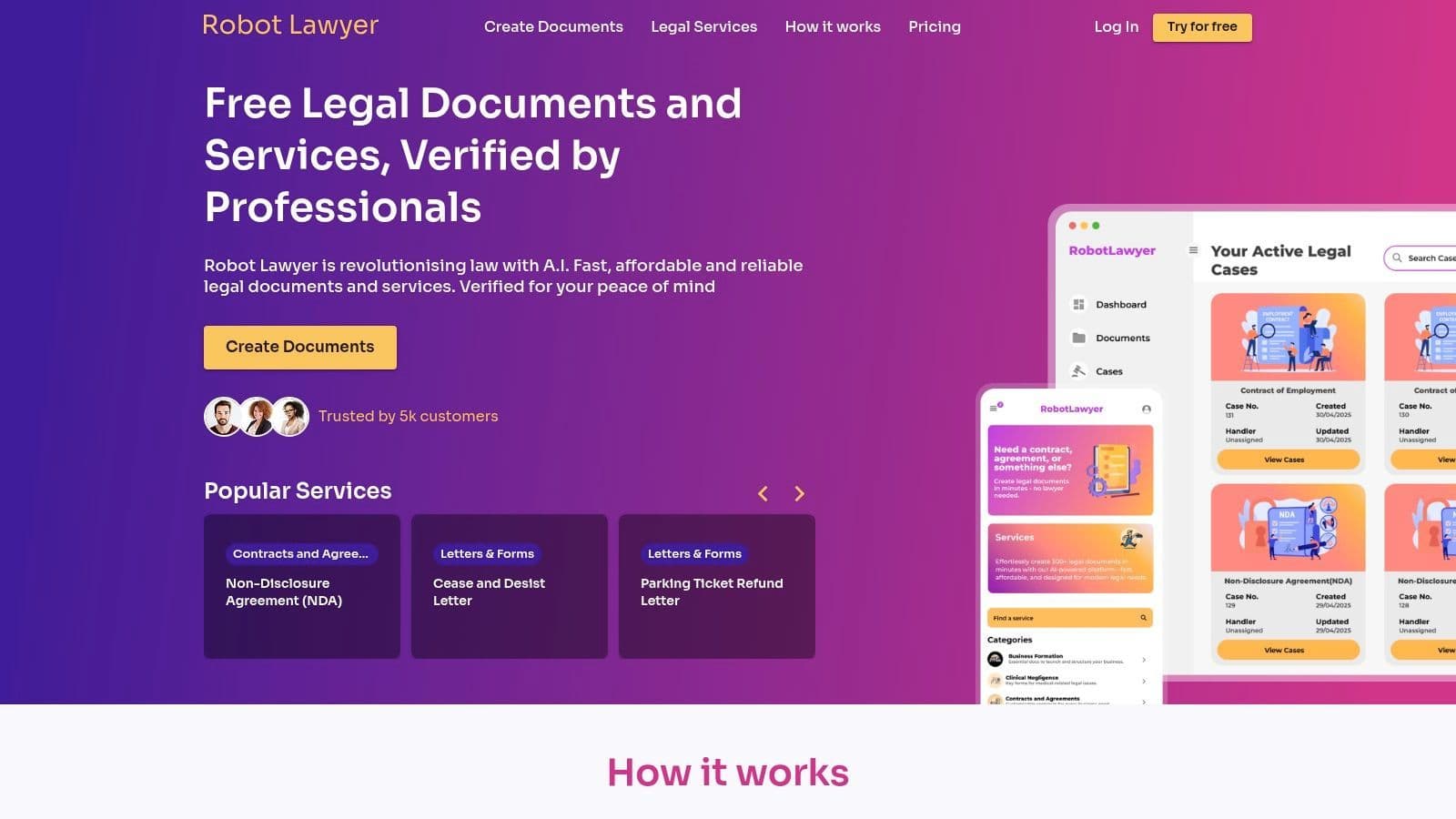
If you want a practical starting point, Robot Lawyer offers an accessible mix of AI-powered document automation and professional verification. You can browse its legal document catalogue, generate customised drafts through a guided questionnaire, and choose a level of support that fits a startup budget. For founders, freelancers, landlords, and small HR teams, it's a low-friction way to bring contract work under control without waiting on traditional legal timelines.