
A Founders Agreement is the single most important document you and your co-founders will sign in the early days. Think of it as a prenuptial agreement for your business partnership. It lays out the ground rules for everything—from equity splits to who does what—before these things have a chance to become problems.
It’s all about turning enthusiastic handshake deals and unspoken assumptions into a clear, legally sound roadmap for your startup's future.
Why Your Startup Needs a Founders Agreement Now

Create a Founders Agreement for Free here!
Starting a company without a founders agreement is like setting sail across the Atlantic without a map or a compass. While the initial excitement and trust can get you out of the harbour, ambiguity is the storm that sinks most founding teams. This document isn't about mistrust; it’s about professional foresight. It’s about building a business that's strong enough to weather the inevitable challenges.
The danger of relying on verbal promises is very real. What happens if a founder walks away after a few months but still claims their full 30% of the company? Or what if you and your partner hit a 50/50 deadlock on a crucial decision, bringing your progress to a screeching halt? These aren’t just what-ifs; they are the common, painful stories that kill promising startups every day.
The Startup's Operating System
A well-crafted founders agreement is like your company’s internal operating system. It’s the playbook that dictates how the team works together, makes decisions, and handles disagreements. This ensures everyone is on the same page, which is a sign of maturity that serious investors always look for.
A founders agreement isn't just a legal document; it's a communication tool. It forces you to have the difficult but necessary conversations early, turning potential conflict areas into points of alignment and strength.
This proactive approach is absolutely vital in the UK's competitive startup scene. Recent data shows that while UK startups raised an impressive $17.3 billion in the first three quarters of 2025, it now takes an average of 3.2 years for founders to secure their first $1M. With such a long journey to that first major milestone, you can't afford to have internal disputes derail your momentum or scare off potential investors. You can learn more about the evolving UK startup funding climate and how to prepare.
Quick Answer: Why a Founders Agreement Is Essential
Without this agreement, you're leaving your startup wide open to a host of preventable disasters. The table below shows just how critical this document is.

Create a Founders Agreement for Free here!
Ultimately, a founders agreement is your first real step towards building a professional, investable, and resilient business. It protects your relationships, your intellectual property, and the vision you all share.
Key Components of a Rock-Solid Founders Agreement
Think of your founders agreement as the blueprint for your company. Each clause is a load-bearing wall, designed to support the business as it grows and faces inevitable stresses. It's tempting to grab a generic template and just sign, but understanding why each part matters is what turns a piece of paper into a genuinely useful rulebook for your partnership. A staggering 65% of start-ups go under because of founder fallouts—many of which could have been sidestepped if these key issues were sorted out from day one.
This is where we get into the nitty-gritty. Let’s break down the non-negotiable clauses that every solid founders agreement needs. We won't just list them; we'll get into what they actually do, with real-world examples to cut through the legal jargon. The aim is to equip you to build an agreement that actively protects your vision.
Equity Ownership and Contributions
This is usually the first, and most heated, conversation you'll have. It’s all about who owns what percentage of the business, and it forms the very foundation of your partnership. It’s absolutely vital to write down not just the final percentages, but the thinking behind them.
Splitting everything equally might feel simple, but it’s rarely the fairest way to do things. A good agreement should clearly show the value each founder brings to the table. This can be a mix of things, like:
- Capital Investment: Who’s putting in the cash?
- Intellectual Property: Is someone bringing existing code, a brand, or a killer business plan?
- Time Commitment: Are you all in full-time, or is someone juggling this with another job?
- Experience and Network: What industry know-how or crucial contacts is each person contributing?
By spelling this out, you justify the equity split and head off any future arguments where someone feels their initial contribution has been forgotten or downplayed. It's like having a clear, transparent receipt of who brought what to the party.
A classic rookie error is agreeing to a 50/50 split just to avoid a tough chat. Don't do it. Have an honest discussion about contributions. A founder putting in £20,000 and working part-time is bringing something very different from a founder who’s all-in full-time but has no cash to invest. Your equity split needs to reflect that reality.
Vesting Schedules
A vesting schedule is the single most important insurance policy for your start-up. In simple terms, it means founders have to earn their shares over time, rather than getting them all at once. Without one, a co-founder could walk away after three months with their entire chunk of the company—a complete disaster for morale and your ability to raise money later.
The UK industry standard is pretty clear: a four-year vesting schedule with a one-year "cliff."
Here’s how it works:
- The Four-Year Schedule: The founder’s equity is released in small chunks over 48 months.
- The One-Year Cliff: For the first 12 months, nothing vests at all. On the one-year anniversary of starting, 25% of the total shares are released in one go. After that, the rest usually vests monthly for the next three years.
This structure is brilliant because it makes sure everyone is committed for the long haul. If someone bails before hitting that one-year mark, they leave with nothing, and the equity stays with the company to reward the remaining team or attract new talent.
Intellectual Property Assignment
For most start-ups, your most valuable asset isn’t in a bank vault; it's the intellectual property (IP)—the code, the branding, the business logic, the secret sauce that makes you unique. That’s why an IP assignment clause is non-negotiable. It’s a simple but powerful statement that legally transfers ownership of any business-related IP created by the founders to the company itself.
Just imagine your CTO builds your entire platform and then quits. Without a clear IP assignment, they could argue that they personally own the code. They could hold your business hostage, or worse, use it to start a rival company.
Your founders agreement template must state, without any ambiguity, that any work, idea, or creation made for the business belongs 100% to the company. This secures your core assets and is one of the first things any serious investor will check for.
Roles, Responsibilities, and Decision-Making
When roles are fuzzy, you get operational chaos. One founder thinks they’re leading the marketing effort while another has already launched a campaign without telling them. This clause is your chance to prevent that mess by clearly defining titles (CEO, CTO, etc.) and what each person is actually responsible for.
But it goes deeper than just day-to-day jobs. You have to agree on how you'll make decisions. A well-drafted agreement creates two clear categories:
- Day-to-Day Decisions: These are the routine choices needed to keep the lights on. The relevant founder can make these calls on their own (e.g., the CTO picking a new software tool).
- Major Decisions: These are the big, company-altering moves that need more than one person to sign off.
These major decisions almost always require a majority or even a unanimous vote from the founders. We’re talking about things like:
- Selling the company
- Taking on significant debt
- Issuing new shares (and diluting everyone’s ownership)
- Hiring C-level executives
- Pivoting the core business model
Setting this framework out from the start stops arguments before they happen and prevents any single founder from being railroaded on a critical issue. It’s the rulebook that keeps the game fair and ensures everyone moves forward together.
How to Navigate Equity Splits and Vesting
Equity is the lifeblood of your startup, but it's also the number one cause of co-founder disputes. Deciding who gets what slice of the company is a delicate, high-stakes conversation. This is where a founders agreement template provides a crucial framework, helping you shift the discussion from a purely emotional one to a logical one.
A common pitfall is defaulting to an easy 50/50 split just to avoid a difficult chat. While it seems fair on the surface, this approach often plants the seeds for future resentment. Real fairness isn't about perfect equality; it's about properly recognising what each founder contributes to the venture.
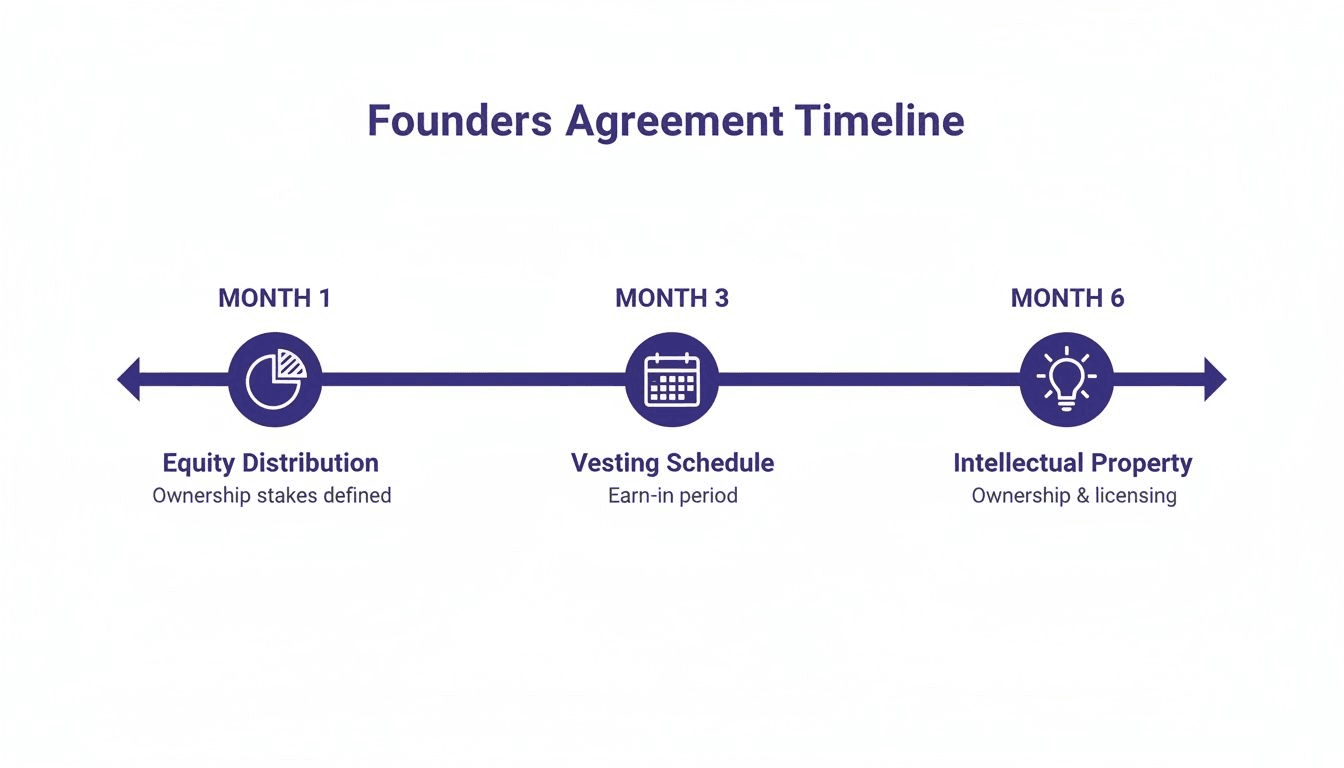
The infographic below shows how the core pillars of your agreement—equity, vesting, and IP—build on one another.
Create a Founders Agreement for Free here!
As you can see, your equity decisions directly inform how you need to structure vesting and protect your intellectual property.
Moving Beyond a 50/50 Split
A much better approach is to have an open, honest discussion about what each person brings to the table. This isn't just about who put in the most cash; it's a complete picture of value. To help guide that conversation, you should weigh up these key factors:
- Initial Capital: Is one founder putting up the seed money to get things off the ground? This carries significant personal risk and should be properly recognised.
- Time Commitment: Is everyone working full-time from day one? A founder dedicating 60 hours a week is contributing very differently from someone working on weekends.
- Pre-existing IP: Is someone bringing a proprietary algorithm, a valuable patent, or an established brand into the new company? That’s a massive head start.
- Experience & Network: Does a founder have deep industry connections or a proven track record of building successful businesses? This kind of expertise has real, tangible value.
Writing down these contributions helps justify the final equity percentages and creates a shared understanding of why the split is fair. It’s the best way to prevent future arguments where a founder feels their early, non-cash contributions were overlooked.
Understanding Vesting and the One-Year Cliff
Once you've settled on the equity split, vesting is the mechanism that ensures everyone actually earns their shares over time. Think of it as an insurance policy for your startup. It protects the business from a founder walking away early with a huge chunk of equity for very little work.
The standard vesting schedule that UK investors expect to see is a four-year term with a one-year cliff.
The "cliff" is a critical milestone. A founder must stay with the company for one full year before any of their shares vest. On their first anniversary, 25% of their total equity becomes theirs. After that, the remaining 75% typically vests in equal monthly chunks over the next three years.
This structure is a powerful way to align all founders on a long-term vision. If someone leaves before hitting the one-year cliff, their unvested shares simply return to the company, ready to be used to incentivise the remaining team or a key new hire. It’s a vital protection that keeps your company’s equity pool stable and valuable. You should also think about setting up a formal framework for future employees, and you can learn more about creating a stock option plan in our dedicated guide.
Recent UK trends show just how critical these pre-agreed terms are. With fundraising taking longer and two-founder teams dominating VC investment rounds, clear rules on vesting and founder departures are non-negotiable. For example, startups that raise over £1.5M at the seed stage are 2-3x more likely to reach Series A, proving the value of getting your initial governance right. You can read more about how UK startup governance is changing and stay ahead of the curve.
Defining Roles, Decision-Making, and Dispute Resolution
While splitting equity and setting up vesting schedules are big wins, it’s the day-to-day operational rules that will keep your business running smoothly. A great company isn’t just built on who owns what; it’s built on clear guidelines for how you work together, make decisions, and solve problems.
This is where your founders agreement goes from a financial document to a practical playbook for your partnership. It turns abstract ideas about teamwork into a concrete plan you can all rely on.
Who Does What Around Here?
First things first: you need to get rid of any grey areas by formally defining everyone’s roles and responsibilities. It’s simply not enough to say one of you is the "tech person" and the other is the "business person." You need to assign clear titles and, more importantly, spell out what each role is actually accountable for.
This isn’t about creating stuffy corporate titles; it's about establishing clear ownership and making sure nothing falls through the cracks. For example:
- Chief Executive Officer (CEO): Ultimately responsible for the company’s vision, strategy, investor relations, and fundraising.
- Chief Technology Officer (CTO): Owns the product roadmap, all technical decisions, and leads the engineering team.
- Chief Marketing Officer (CMO): In charge of customer acquisition, branding, and all marketing and communications.
Putting this in writing avoids one of the most common startup traps: essential tasks getting ignored because everyone assumes someone else is handling it.
Structuring Your Decision-Making Process
With roles clearly defined, the next step is to agree on how you’ll make decisions. A solid founders agreement creates two categories of decisions, which helps you move fast on small things while being careful with the big ones.
Day-to-Day Decisions: These are the routine choices that fall within each founder’s area of expertise. The CMO should be able to approve a marketing campaign, and the CTO should be free to select a new software tool without calling a meeting. Giving founders this autonomy keeps the business nimble and empowers them to do their jobs effectively.
Major Decisions: These are the big, company-changing moves that demand collective agreement. Because these actions can completely alter the company's future, they need a higher bar for approval, like a majority or even a unanimous vote from all founders.
Your agreement needs to explicitly list what counts as a "major decision." Think things like selling the company, taking on significant debt, issuing new shares (which dilutes everyone’s ownership), pivoting the business model, or firing a co-founder. This clause is your safety net, preventing one founder from making a call that could sink the whole company.
Handling Disagreements Constructively
Let's be clear: disagreements between founders are not just common; they're inevitable. You're building something new with other passionate, intelligent people. Conflict is guaranteed. The real danger isn't the disagreement itself, but letting it fester unresolved.
In fact, research shows that over 65% of startups fail because of founder disputes. This statistic alone should convince you to have a clear resolution process in place before you ever need it.
Your founders agreement should lay out a simple, step-by-step process for resolving conflicts, designed to keep things out of expensive, public court battles. A good structure often looks like this:
- Informal Discussion: The first port of call should always be a direct, honest conversation between the founders who disagree.
- Formal Mediation: If you can’t resolve it yourselves, the next step is to bring in a neutral third-party mediator. Their job is to help you find common ground, but their recommendation isn't legally binding.
- Binding Arbitration: If mediation fails, this is the final step. An arbitrator will hear both sides and make a final, legally enforceable decision. It’s like a private court, but much faster and less costly than a formal lawsuit.
Having this process mapped out shows a level of maturity that investors love to see. More importantly, it gives you and your co-founders a healthy way to release tension and ensure that disagreements make your partnership stronger, not break it apart.
Create a Founders Agreement for Free here!
Planning for Dilution, Exits, and Founder Departures
Nobody launches a startup dreaming about their ownership stake getting smaller or a co-founder walking away. But these aren’t just distant what-ifs; they are natural, often unavoidable, parts of growing a business. A well-crafted founders agreement template doesn't just hope for the best—it prepares for reality with a clear and fair process.
Think of these clauses not as planning for failure, but as building a resilient company. When investment opportunities or team changes come knocking, you'll have a roadmap to navigate them without descending into chaos.
Understanding Share Dilution
First things first, let’s get our heads around share dilution. In simple terms, your personal ownership percentage goes down because the company issues new shares. This almost always happens when you bring in investors to fund your growth.
It sounds like a bad thing, but dilution is a sign of growth, not a loss of value.
Think about it this way: would you rather own 100% of a company worth £100,000, or 70% of a company worth £1,000,000? Dilution is the trade you make to grow the whole pie. A good founders agreement sets the rules for how and when new shares can be issued, making sure the process is controlled and transparent for everyone.
Protecting Founders During an Exit
When an offer to buy the company comes along, the final number is what gets everyone excited. But how you get to that finish line is just as important, and your agreement needs to protect every founder's interests. Two of the most critical clauses here are drag-along and tag-along rights.
- Drag-Along Rights: This clause is all about protecting the majority. It lets founders who own most of the shares (say, over 75%) "drag" the minority shareholders into a sale. It’s a vital tool to stop one person with a small stake from blocking a great deal that benefits everyone else.
- Tag-Along Rights: This one protects the minority. If a majority shareholder decides to sell their stake, this gives minority shareholders the right to "tag along" and sell their shares at the same price and on the same terms. It stops them from being left behind with new, unfamiliar owners.
These clauses are more important than ever. With UK firms raising a massive $17.3 billion in the first nine months of 2025, investors are writing fewer, bigger cheques. They need to know a future sale won't get bogged down by internal disagreements. And since startups raising over £1.5M at the seed stage are 2-3 times more likely to secure Series A funding, having these terms shows you’re serious and ready for big-league investment. You can read more about what UK founders need to know when navigating investor expectations.
Managing Founder Departures
People leave startups. It happens for all sorts of reasons—some good, some not so good. Your agreement must have a clear plan for what happens when a founder leaves, whether it's their choice or not. This is where your vesting schedule really comes into play.
A founder departure clause is the safety switch connected to your vesting schedule. It decides what happens to both vested and unvested shares when someone leaves, making sure a departing founder can't hold the company’s equity hostage.
Your agreement should lay out different scenarios for "Good Leavers" (like someone who has to leave due to a serious illness) and "Bad Leavers" (someone fired for gross misconduct or who quits to start a rival company).
It's also crucial to include pre-emption rights. This gives the remaining founders the first chance to buy a departing founder's shares before they can be sold to an outsider. Together, these clauses protect the company, reward the founders who stick around, and create a predictable path forward, no matter what happens. As your company grows and brings on investors, you might need the more detailed provisions found in a shareholder agreement.
Create Your Custom Founders Agreement in Minutes
So, you've waded through the tough conversations and figured out what your startup needs from its founders agreement. The next step? Getting it all down on paper without the eye-watering solicitor fees or the risk of using a generic template that doesn’t quite fit.
This is where Robot Lawyer comes in. We help you turn those crucial decisions into a solid, legally-sound agreement, saving you time, money, and a lot of hassle. Our platform walks you through a simple, question-based process covering everything we've talked about – from equity splits and vesting to roles and decision-making.
Think of it as translating your co-founder handshake into a professional, reliable document. It gives you the confidence to stop worrying about the 'what ifs' and get back to actually building your business.
From Questions to Contract
The whole process is designed to be quick and clear. You don't need any legal background to get started. Just have your key decisions ready and input your choices into our platform.
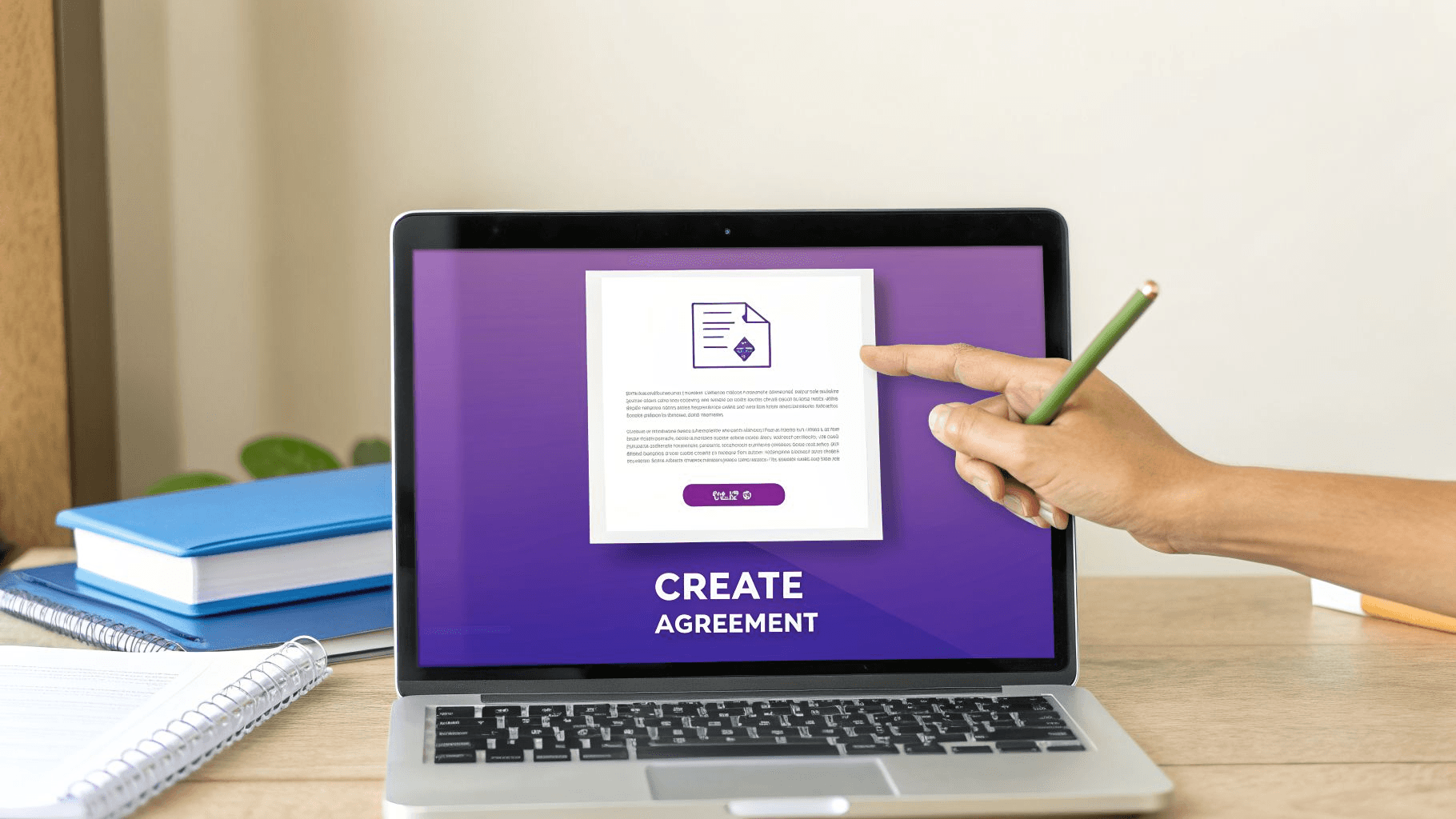
For instance, our platform breaks down complex clauses into straightforward, guided questions, just like you see here.
Create a Founders Agreement for Free here!
This approach ensures you don't miss anything important. Every essential area, from assigning intellectual property to agreeing on what happens if a founder leaves, is covered. The end result is a comprehensive agreement built specifically for your team.
This isn’t just about convenience; it’s about security. With studies showing that over 65% of startups fail because of co-founder conflict, a clear agreement is your single best line of defence.
You can get a better feel for our simple, three-step process by exploringhow Robot Lawyer works.
By automating the drafting, we empower you to formalise your partnership and protect your vision without the typical delays and costs. This means you can finalise your agreement and get straight back to what really matters—growing your company.
Start Your Agreement Today
Ready to build a solid foundation for your startup? You can start your free trial with Robot Lawyer right now. In just a few minutes, you can generate a custom founders agreement and even have it checked by a legal professional with our Premium plan.
Don't let unanswered questions put your dream at risk. Get the clarity and confidence you need to move forward together.
Frequently Asked Questions About Founders Agreements
When you're building a startup, questions are inevitable—especially about a document as foundational as your founders agreement. We've pulled together the most common queries to give you clear, straightforward answers so you can move forward with confidence.
Is a Founders Agreement Legally Binding?
Yes, without a doubt. When it’s drafted properly and signed by all co-founders, a founders agreement is a legally enforceable contract here in the UK. It’s far more than an informal handshake; think of it as the official rulebook for your business partnership.
That legal weight is precisely what makes it so powerful in heading off disputes down the road. It’s also why grabbing an unverified founders agreement template off the internet can be so risky. For it to hold up, the agreement needs to be clear, comprehensive, and fully compliant with UK contract law.
Can We Just Use a Free Template from the Internet?
A template is a fantastic starting point, but you should never, ever use one straight out of the box. Your team, your individual contributions, and your vision for the company are unique—your agreement must reflect that. A generic document simply can't account for your specific equity splits, vesting schedules, or intellectual property.
Using a template as-is is like wearing someone else's prescription glasses. It might seem to work at first glance, but you won't see things clearly, and it’s bound to cause a massive headache later. Always adapt it to fit your situation.
When Is the Best Time to Create the Agreement?
The simple answer is as early as possible. Ideally, you should have your founders agreement drafted and signed before you’ve even formally incorporated the company or started any major work.
Getting this done early forces you to have those crucial, sometimes difficult, conversations about equity, roles, and expectations from day one. If you put it off, assumptions and unspoken disagreements can fester, becoming much harder to resolve once the business has momentum. One study found that over 65% of startups fail because of co-founder conflict—a risk you can seriously reduce by getting this sorted from the start.
Ready to create a professional, customised agreement without the legal headache? With Robot Lawyer, you can generate a document tailored to your startup in minutes. Start your free trial today and build the solid foundation your business deserves at https://robotlawyer.co.