

7 Strategic Cease and Desist Letter Examples for UK Issues (2026)
Facing unauthorised use of your work, unfair damage to your reputation, or persistent harassment can feel overwhelming. Before escalating to costly court battles, a well-crafted cease and desist letter is your first, most powerful line of defence. This formal demand not only puts the offending party on notice but also creates a crucial legal record, proving you took reasonable steps to resolve the issue. It is a strategic tool designed to stop harmful behaviour without immediate litigation, saving you time, money, and stress.
This guide moves beyond generic templates to provide a detailed breakdown of real-world cease and desist letter examples. We will dissect seven specific UK-focused scenarios, revealing the strategic nuances required for each situation. You will learn not just what to write, but when to send it, the precise tone to adopt, and the key clauses that give your demand legal authority.
From protecting your copyright and trademark to stopping defamation, harassment, or a breach of contract, these actionable insights will empower you to defend your rights confidently and effectively. We will analyse each example, explaining:
- When to Use It: Identifying the right circumstances for each letter.
- Key Clauses: Breaking down the essential legal components.
- Strategic Tone: Guidance on being firm yet professional.
- Next Steps: What to do after you send the letter.
By understanding the mechanics behind these documents, you can assert your position clearly and prepare for any necessary escalation. This article provides the practical knowledge needed to take control of the situation and demand that the unwanted action stops.
1. Intellectual Property Infringement Cease and Desist Letter
An intellectual property (IP) infringement cease and desist letter is a formal notice sent to an individual or company to demand they stop using your protected work without permission. This is one of the most common and powerful cease and desist letter examples because it serves as the first line of defence for creators, businesses, and innovators whose core value is tied to their original ideas. The letter asserts your ownership of a trademark, copyright, or patent and outlines the specific actions that constitute infringement.

Create a free Cease & Desist Letter here!
This type of letter is essential when you discover someone is unlawfully using your assets. For instance, a software developer might find another company has copied their code, or a fashion designer could see counterfeit versions of their designs being sold online. The letter’s primary purpose is to resolve the dispute quickly and cost-effectively, avoiding the need for immediate court action.
When to Use This Letter
You should send an IP infringement letter as soon as you discover the unauthorised use of your property. Common scenarios include:
- Copyright Infringement: Someone has uploaded your video, music, or article to their own site without your consent.
- Trademark Violation: A competitor is using a logo or brand name that is confusingly similar to your registered trademark, potentially misleading customers.
- Patent Infringement: Another business is manufacturing or selling a product that uses your patented invention or design.
- Trade Secret Misappropriation: A former employee has taken your confidential client list or proprietary formula to a new company.
Key Clauses and Strategic Insights
A well-constructed IP letter contains several critical components. It must be firm and professional, clearly stating the facts without being overly aggressive. The tone should convey that you are serious about protecting your rights but are open to a resolution without litigation.
Strategic Takeaway: Your initial letter sets the stage for all future interactions. A clear, evidence-based, and firm letter is more likely to achieve compliance than an emotional or threatening one. It also serves as a crucial piece of evidence should the matter escalate to court.
Key elements to include are:
- Identification of Your IP: State precisely what is being infringed, including registration numbers for trademarks or patents.
- Evidence of Infringement: Provide direct links, screenshots, or photographs showing the unauthorised use. Be specific.
- Demand for Action: Clearly state that the recipient must "cease and desist" all infringing activities immediately.
- A Deadline for Compliance: Set a reasonable timeframe (usually 10 to 20 business days) for a response and confirmation of compliance.
Next Steps and Legal Risks
After sending the letter, ideally via a tracked method like Royal Mail Signed For to have proof of delivery, you must monitor the situation. If the infringer complies, the matter is resolved. If they ignore the letter or refuse to stop, your next step is to consult a solicitor. The letter itself carries minimal legal risk, but failing to follow through can weaken your position. To ensure your notice is legally sound, you can generate verified intellectual property documents and letters tailored to your situation.
2. Defamation and Libel Cease and Desist Letter
A defamation and libel cease and desist letter is a formal demand sent to an individual or organisation to stop making false, damaging statements about you or your business. Libel refers to defamatory statements in written or permanent form, such as on websites, social media, or in print. This is one of the most critical cease and desist letter examples for protecting your reputation in an age where misinformation can spread rapidly. The letter identifies the false statements, explains why they are defamatory, and demands their immediate removal.

Create a free Cease & Desist Letter here!
This letter is your first step in combating harmful falsehoods that can tarnish your personal standing or commercial success. A business owner might use it to address a fabricated negative review on Google, or an individual could send one to stop slanderous posts on social media. Its goal is to secure a swift retraction and prevent further harm, serving as a formal warning before pursuing legal action for damages.
When to Use This Letter
You should send a defamation letter as soon as you become aware of a false statement of fact that is causing you harm. It is crucial to act quickly to limit the damage. Common scenarios include:
- False Online Reviews: A competitor or disgruntled person posts a fake, damaging review about your business on a platform like Trustpilot or Google.
- Social Media Slander: An individual posts untrue and malicious claims about you or your company on Facebook, X (formerly Twitter), or Instagram.
- Inaccurate Media Reports: A blog, news outlet, or publication publishes an article containing false information that harms your reputation.
- Misleading Employee Reviews: A former employee posts fabricated stories about their employment experience on sites like Glassdoor, impacting your ability to recruit.
Key Clauses and Strategic Insights
A powerful defamation letter is factual, precise, and unemotional. It must clearly differentiate between a negative opinion, which is generally protected speech, and a false statement of fact, which can be legally actionable. The letter's purpose is to present an undeniable case that the statements are untrue and demand their correction.
Strategic Takeaway: Archive everything before you act. Screenshot and save all defamatory content with dates and URLs. This evidence is your most important asset, proving exactly what was said and where, which is vital if the publisher later deletes the content.
Key elements to include are:
- Identification of Defamatory Statements: Quote the exact false statements and provide links or references to where they were published.
- Explanation of Falsity: Concisely explain why each statement is factually incorrect. Provide counter-evidence if possible.
- Demand for Action: Insist that the recipient "cease and desist" from making further defamatory statements and demand both the removal of the existing content and the publication of a retraction.
- A Deadline for Compliance: Set a firm but reasonable deadline (e.g., 7 to 14 days) for the recipient to confirm in writing that they have complied with your demands.
Next Steps and Legal Risks
Send the letter using a tracked delivery service, like Royal Mail Signed For, to confirm receipt. If the recipient complies, your reputation is on its way to being restored. If they ignore your letter or refuse the request, your next move should be to consult a solicitor specialising in defamation law. The letter itself carries little risk, but it's important to be sure your claims are accurate, as a false accusation of defamation could backfire. To ensure your notice is correctly phrased and legally sound, you can generate verified legal documents and letters designed for these situations.
3. Harassment and Threatening Behavior Cease and Desist Letter
A harassment and threatening behaviour cease and desist letter is a formal demand for an individual or group to immediately stop any actions that cause alarm, distress, or fear. This letter serves as an official record that you have clearly communicated the unwanted nature of the conduct and have requested its cessation. It is one of the most critical cease and desist letter examples for personal safety and workplace management, creating a paper trail that can be used as evidence if legal action becomes necessary.
This type of notice formally outlines the specific behaviours considered harassment, such as unwanted contact, threats, stalking, or workplace bullying. Its purpose is to put the offending party on notice that their actions are being documented and that failure to comply will result in escalation, which may involve law enforcement or civil court proceedings. The letter is a powerful first step in reclaiming your sense of security and establishing firm boundaries.
When to Use This Letter
You should consider sending this letter when you are experiencing persistent and unwelcome behaviour that makes you feel unsafe or victimised. It is crucial to act decisively to prevent the situation from escalating. Common scenarios include:
- Workplace Harassment: An employer or HR department sending a letter to an employee who is bullying or intimidating a colleague.
- Cyber-harassment or Stalking: An individual being targeted with persistent, unwanted online messages, comments, or threats.
- Tenant Disputes: A landlord intervening when one tenant is harassing another, disrupting their right to quiet enjoyment of their property.
- Personal Harassment: An individual addressing unwanted phone calls, text messages, or in-person visits from a former partner, acquaintance, or stranger.
Key Clauses and Strategic Insights
A letter addressing harassment must be factual, firm, and devoid of emotion. The goal is to state the facts clearly and outline the consequences, not to engage in a back-and-forth argument. The tone must convey absolute seriousness and a non-negotiable demand for the behaviour to stop.
Strategic Takeaway: Documentation is your most powerful tool. Before sending the letter, compile a detailed log of every incident, including dates, times, locations, witnesses, and specific descriptions of the behaviour. This evidence makes your claims credible and demonstrates a pattern of harassment that is difficult for the recipient to deny.
Key elements to include are:
- Specific Description of Behaviour: Do not be vague. List the exact actions that constitute harassment (e.g., "your 15 phone calls on 18th October," "your threatening comments on my social media post on 22nd October").
- Clear Demand to Cease: Use unequivocal language, such as "You must immediately cease and desist all forms of contact and harassment."
- Statement of Consequences: Explicitly state that if the behaviour does not stop, you will pursue further legal action, including but not limited to, contacting the police and seeking a restraining order or injunction.
- No Contact Clause: Demand that the recipient not contact you, your family, or your employer in any way, except through a legal representative if they choose to have one.
Next Steps and Legal Risks
Send the letter via a method that provides proof of delivery, such as Royal Mail Signed For. This confirms the recipient cannot claim they never received the warning. Keep a copy for your records, along with your log of incidents. If the harassment continues after the letter is sent, you must follow through on your stated consequences.
Contact the police or a solicitor immediately. The letter itself carries little legal risk, as it is a statement of your rights and demands. However, failing to act after a violation of your demand can signal to the harasser that your warnings are empty. Using a verified legal template can ensure your letter is correctly worded and legally sound.
4. Unauthorised Use of Likeness and Publicity Rights Cease and Desist Letter
An unauthorised use of likeness cease and desist letter is a formal demand for an individual or company to stop using your name, image, voice, or other identifying attributes for commercial gain without your permission. This notice is a crucial tool for influencers, entrepreneurs, and anyone whose personal brand is a significant business asset. It asserts your right to control how your identity is used commercially, often referred to as publicity rights.

Create a free Cease & Desist Letter here!
This letter has become one of the more vital cease and desist letter examples for creators in the digital economy. For instance, a fitness influencer might find a supplements company using their Instagram photos in advertisements without a contract, or an entrepreneur could discover their face printed on merchandise sold by a third party. The letter's purpose is to stop the misuse and protect the commercial value of your personal brand, preventing others from profiting from your reputation.
When to Use This Letter
You should send this letter as soon as you discover your likeness is being used for a commercial purpose without your consent. Common scenarios include:
- Unauthorised Advertising: A brand uses your photo or video in a social media ad or on their website to promote their products.
- Merchandise Sales: Someone is selling t-shirts, mugs, or other items featuring your face or name.
- False Endorsement: A company implies you endorse their services by using your image or a fabricated testimonial.
- Content Monetisation: Compilation accounts on platforms like YouTube or TikTok use clips of your content to generate their own ad revenue.
Key Clauses and Strategic Insights
A strong likeness infringement letter must be precise and backed by evidence. The tone should be firm, clearly outlining the violation and the damage it causes to your brand's commercial value. It demonstrates you are serious about protecting your publicity rights but offers a path to resolution.
Strategic Takeaway: Frame the unauthorised use not just as a violation of your privacy, but as a direct harm to your business. Explaining how it dilutes your brand, confuses your audience, and undermines your paid partnerships adds significant weight to your demand.
Key elements to include are:
- Identification of Your Likeness: State exactly what has been used - a specific photograph, video clip, your name, etc.
- Evidence of Unauthorised Use: Provide screenshots and direct links showing your likeness in a commercial context (e.g., on a product page, in an advertisement).
- Statement of No Consent: Explicitly state that you have not given permission for this use and have not signed a release form. A properly executed agreement, such as a model release form, is typically required for commercial use.
- Demand for Action and Deadline: Demand the immediate removal of your likeness from all commercial materials and set a clear deadline (e.g., 10-15 business days) for them to confirm compliance.
Next Steps and Legal Risks
Send the letter via a tracked delivery service to have proof it was received. After sending, meticulously check whether the infringing content has been removed from all platforms. If the recipient complies, the issue may be resolved. If they ignore your letter or refuse to act, your next course of action is to consult a solicitor who specialises in media or intellectual property law. The letter itself carries little risk, but it is the first formal step in establishing a legal record of the infringement and your attempt to resolve it.
5. Non-Disclosure Agreement Breach Cease and Desist Letter
A Non-Disclosure Agreement (NDA) breach cease and desist letter is a formal demand sent to a party who has disclosed, or is threatening to disclose, confidential information protected under an NDA. Among the various cease and desist letter examples, this one is crucial for protecting the sensitive data that gives a business its competitive edge. It serves as an immediate and official warning that the recipient must stop their actions to avoid legal consequences.
This letter is a vital tool for startups protecting their business plans, technology companies safeguarding product specifications, and employers protecting client lists. The core purpose is to enforce the contractual obligation of silence agreed upon in the NDA and to prevent further damage from the unauthorised sharing of proprietary information. It formally puts the breaching party on notice and demands they remedy the violation.
When to Use This Letter
You should send this letter the moment you discover that confidential information has been shared in violation of a signed NDA. Prompt action is key to mitigating damage. Common situations include:
- Former Employee Misconduct: A former employee shares proprietary systems, trade secrets, or strategic plans with a new employer or competitor.
- Investor or Partner Leaks: A potential investor or business partner, after reviewing your confidential business plan under an NDA, discloses details to third parties.
- Product Specification Leaks: Information about a new product's design or technical specifications is leaked before its official launch.
- Client Data Disclosure: A consultant or contractor shares your confidential client list or sensitive project methodologies without authorisation.
Key Clauses and Strategic Insights
An effective NDA breach letter must be precise and grounded in the original agreement. It needs to be firm and unequivocal, demonstrating your intent to enforce your contractual rights while clearly outlining the path to compliance.
Strategic Takeaway: Directly reference the specific clauses of the signed NDA that have been breached. This transforms your claim from a general complaint into a clear contractual violation, significantly strengthening your legal position and increasing the likelihood of compliance.
Key elements to include are:
- Reference the NDA: Clearly identify the Non-Disclosure Agreement in question, including the date it was signed and the parties involved.
- Specify the Breach: Detail what confidential information was disclosed, to whom, and when. Provide evidence if possible.
- Quote the Relevant Clause: Directly cite the section of the NDA that defines confidentiality and prohibits disclosure.
- Demand for Action: Insist on the immediate cessation of any further disclosures and demand the return or certified destruction of all copies of the confidential materials.
- Set a Deadline: Provide a clear and reasonable deadline (e.g., 10 business days) for the recipient to provide written confirmation that they have complied with all demands.
Next Steps and Legal Risks
Send the letter using a tracked delivery service to have proof of receipt. After sending, you must monitor the situation closely to ensure the disclosures stop. If the recipient complies and provides a written assurance, the immediate issue may be resolved. However, if they ignore the letter or dispute the claim, your next step is to consult a solicitor to discuss options like seeking an injunction or suing for damages. To ensure your initial NDA is robust, you can use templates and pair them with a follow-up letter. You can create a legally sound Non-Disclosure Agreement to better protect your information from the outset.
6. Patent Infringement Cease and Desist Letter
A patent infringement cease and desist letter is a formal notice sent to an entity that is manufacturing, using, or selling a product or process covered by your patent without authorisation. It is one of the most technical and legally significant cease and desist letter examples, serving as a critical tool for inventors, tech companies, and manufacturers to defend their exclusive rights. The letter asserts your ownership of the patent and details precisely how the recipient’s activities are infringing upon your protected invention.
This type of letter is the first formal step in enforcing your patent rights. For example, a technology company might discover a competitor selling software that uses its patented algorithm, or a pharmaceutical firm could find a generic manufacturer producing a drug that infringes its patent. The letter’s primary goal is to stop the infringement and potentially open a dialogue for licensing or damages, thereby avoiding expensive and lengthy court proceedings.
When to Use This Letter
You should send a patent infringement letter once you have gathered clear evidence that your patent is being infringed. Common scenarios include:
- Product Infringement: A competitor is selling a product that incorporates the technology or design protected by your utility or design patent.
- Process Infringement: Another company is using a manufacturing process that you have patented to produce its own goods.
- Software Patent Violation: A software product on the market unlawfully uses methods or algorithms covered by your software patent.
- Pharmaceutical Patent Infringement: A generic drug manufacturer begins producing a medication that is still under your patent protection.
Key Clauses and Strategic Insights
A patent infringement letter demands precision and a high level of detail. It must be professionally drafted and grounded in factual, technical evidence. The tone should be firm and authoritative, demonstrating your readiness to protect your rights, while potentially leaving the door open for a business resolution like a licensing agreement.
Strategic Takeaway: Unlike other IP letters, a patent infringement notice often involves complex technical comparisons. Consulting with a patent solicitor before sending it is highly recommended to ensure accuracy and avoid making admissions that could weaken your position later.
Key elements to include are:
- Precise Patent Identification: Clearly state the full patent number, title, and issue date.
- Evidence of Infringement: Provide a detailed technical comparison, often called a "claim chart," showing how the accused product or process infringes on specific claims of your patent. Attach relevant patent drawings.
- Demand to Cease and Desist: Explicitly demand an immediate stop to all infringing activities, including manufacturing, selling, and marketing the product.
- Offer of a Licensing Opportunity: If it aligns with your business strategy, you can suggest the possibility of a licensing agreement as an alternative to litigation.
Next Steps and Legal Risks
After sending the letter via a tracked delivery service to confirm receipt, you must monitor the infringer’s response. If they agree to your terms, the matter can be settled. If they ignore the letter or dispute your claim, your next step is to engage a patent solicitor to initiate legal action. A poorly drafted letter can expose you to a declaratory judgment action, where the accused infringer sues you to have your patent declared invalid or not infringed. To build a strong foundation, you can start by generating verified legal documents tailored to patent matters.
7. Contract Breach and Specific Performance Cease and Desist Letter
A contract breach cease and desist letter is a formal demand sent to a party who is violating the terms of a legally binding agreement. Unlike other cease and desist letter examples that focus on stopping an external threat, this letter addresses a breakdown within an existing relationship. It asserts your contractual rights and demands that the other party either stop their breaching actions or perform a specific obligation they have failed to meet (known as "specific performance").
This letter acts as a crucial intermediate step between informal requests and expensive litigation. It is particularly valuable for businesses managing vendor relationships, service agreements, and employment contracts. The goal is to formally document the breach and provide a clear path to resolution, giving the offending party a final chance to remedy the situation before you pursue legal action for damages or termination.
When to Use This Letter
You should send a contract breach letter when a party's actions (or inaction) materially violate the terms you both agreed to, and informal communication has failed. Common scenarios include:
- Service Agreement Failures: A supplier consistently fails to deliver goods or services as outlined in your commercial contract.
- Non-Payment: A client has a pattern of not paying invoices on time, despite the payment terms specified in your service agreement.
- Employee Contract Violations: An employee is engaging in activities explicitly forbidden by their employment contract, such as working for a competitor.
- Tenancy Agreement Breaches: A tenant is violating terms of their rental agreement, such as making unauthorised alterations to the property.
Key Clauses and Strategic Insights
A powerful contract breach letter is precise and evidence-based. It should directly reference the agreement and detail the violations without emotional language. The tone should be firm and serious, showing you understand your rights and are prepared to enforce them, while still allowing for a "cure period" for the breach to be corrected.
Strategic Takeaway: Quote the specific clause(s) from the contract that are being violated. This removes ambiguity and demonstrates that your claim is based on the agreed-upon terms, not just a general sense of dissatisfaction. This precision makes your demand harder to ignore.
Key elements to include are:
- Reference the Contract: Clearly identify the contract by its title and date of signing.
- Detail the Breach: Provide exact dates and specific descriptions of each instance of the breach. Quantify the operational or financial impact if possible.
- Quote the Relevant Clauses: Directly cite the section or clause number from the contract that has been violated.
- Demand for Cure: State exactly what the recipient must do to remedy the breach (e.g., "complete the delivery of X by Y date" or "pay outstanding invoice #123 immediately").
- Set a Deadline: Provide a reasonable timeframe for the party to "cure" the breach (e.g., 14 days), and specify the consequences of non-compliance, such as contract termination or legal action for damages.
Next Steps and Legal Risks
Send the letter using a tracked delivery service to have proof it was received. After the cure period expires, assess whether the other party has complied. If they have corrected the breach, you can continue the contractual relationship, albeit with a formal record of the incident. If they ignore the letter or refuse to comply, your next step is to consult a solicitor to discuss pursuing damages, terminating the contract, or seeking a court order for specific performance. The letter itself strengthens your legal position by showing you made a good-faith effort to resolve the dispute before escalating it.
7 Cease and Desist Letter Types Compared
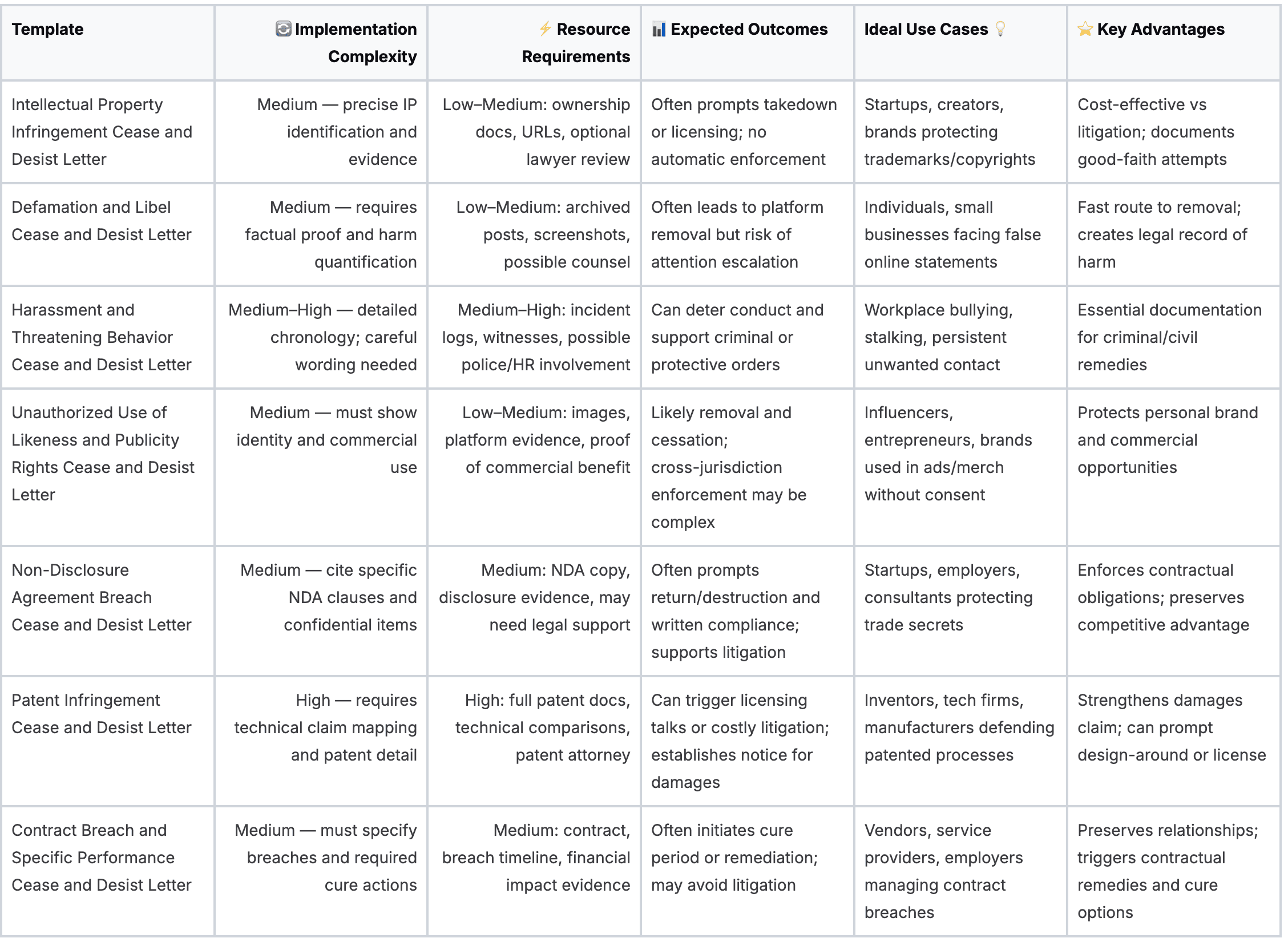
Create a free Cease & Desist Letter here!
Your Next Steps: From Letter to Resolution
Throughout this guide, we have dissected seven distinct cease and desist letter examples, moving beyond simple templates to uncover the strategic thinking that makes them effective. You have seen how a letter addressing intellectual property theft demands different evidence and a different tone than one designed to stop harassment or a breach of contract. The central lesson is clear: a powerful cease and desist letter is not just a warning shot, but a calculated first move in a legal chess game.
The true strength of these documents lies in their precision. An effective letter is built upon a foundation of solid evidence, a clear articulation of your legal rights, and an unambiguous demand for specific action. It demonstrates that you are organised, serious, and fully aware of the legal ground you stand on. This initial display of competence can often be enough to compel the recipient to comply without needing further action.
Key Strategic Takeaways
As you move forward, remember these core principles drawn from the cease and desist letter examples we've analysed:
- Evidence is Paramount: Your claims are only as strong as the proof you can provide. Before writing a single word, gather all relevant documentation, screenshots, contracts, and correspondence. This evidence informs the letter and prepares you for any subsequent disputes.
- Clarity Over Aggression: While it can be tempting to use aggressive language, a firm, professional, and factual tone is almost always more effective. The goal is to present an undeniable legal and factual position that makes compliance the most logical option for the other party.
- The Follow-Through is Crucial: Sending the letter is just the beginning of the process. You must be prepared for what comes next. This means meticulously monitoring for compliance, being ready to open negotiations for a settlement, or having a clear plan for escalating the matter to a solicitor if your demands are ignored. A threat you are not prepared to act on is an empty one.
Your Actionable Roadmap
With these insights in mind, your path to resolution should follow a clear and organised structure. Do not simply send a letter and hope for the best. Instead, adopt a methodical approach to protect your interests.
First, document everything meticulously. Keep copies of the final letter you send, proof of delivery from Royal Mail or a courier, and any and all responses you receive. This paper trail is invaluable if legal proceedings become necessary.
Second, set a firm but reasonable deadline. As shown in the examples, giving the recipient 7 to 14 days to respond and comply is standard practice. This timeframe shows you are serious but also acting in good faith, which can be viewed favourably in any future legal context.
Finally, know your escalation point. Decide in advance what your next step will be if the deadline passes with no response or an unsatisfactory one. Will you send a final warning? Will you engage a solicitor immediately? Knowing this beforehand prevents panic and ensures you maintain control of the situation. For many businesses and individuals, the most significant hurdle is creating that initial letter with the confidence that it is legally sound and professionally drafted. Starting from a blank page can feel daunting, and a poorly written letter can do more harm than good.
Ready to create a cease and desist letter that is both professional and effective, but unsure where to start? The tools offered by Robot Lawyer Limited can help you generate verified legal documents tailored to your specific needs. Instead of guessing at the right clauses and tone, you can build a robust letter based on the very principles discussed in this article, ensuring your first step towards resolution is a strong one. Visit Robot Lawyer.co to protect your rights with confidence.